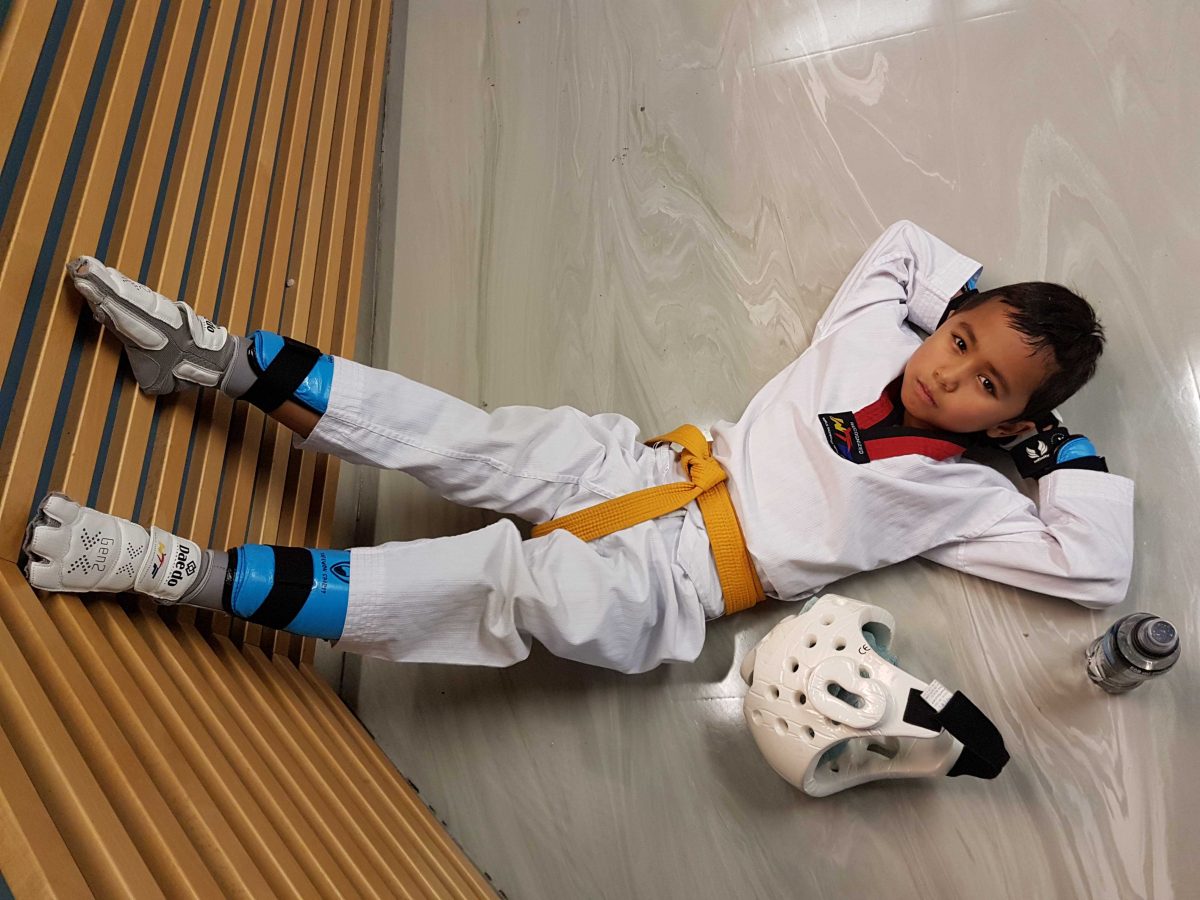
WT released the World Taekwondo AR Textbook application on October 8, 2020 in Seoul, Korea. The application helps in learning and correctly performing movement sequences.
Download from Google Play Store>>
News on WT website>>
 Taekwondo athletes 2011 | Taekwondo in the best company | Helsinki | Espoo | Vantaa
WT released the World Taekwondo AR Textbook application on October 8, 2020 in Seoul, Korea. The application helps in learning and correctly performing movement sequences.
Download from Google Play Store>>
News on WT website>>
TU11 organizes an invitational competition for ranking-level athletes. If you want to join and do not have an invitation, please contact us sampo@tu11.fi.main.hoste.fi.
Daedo Gen-2 system is used in the race.
Schedule:
11:00 Hall doors open
12:00 Let's start the matches
18:00 Let's finish the matches (indicative)
Let's take 2×2 min. matches 1 min. on break. The match time for cadets is 1.5 min. with a minute break. There will be some judges, but all judges are welcome if there is a desire.
Separate registration is not required for invitees.
The event is free for those invited, but there is a donation box on site where you can put the desired amount.
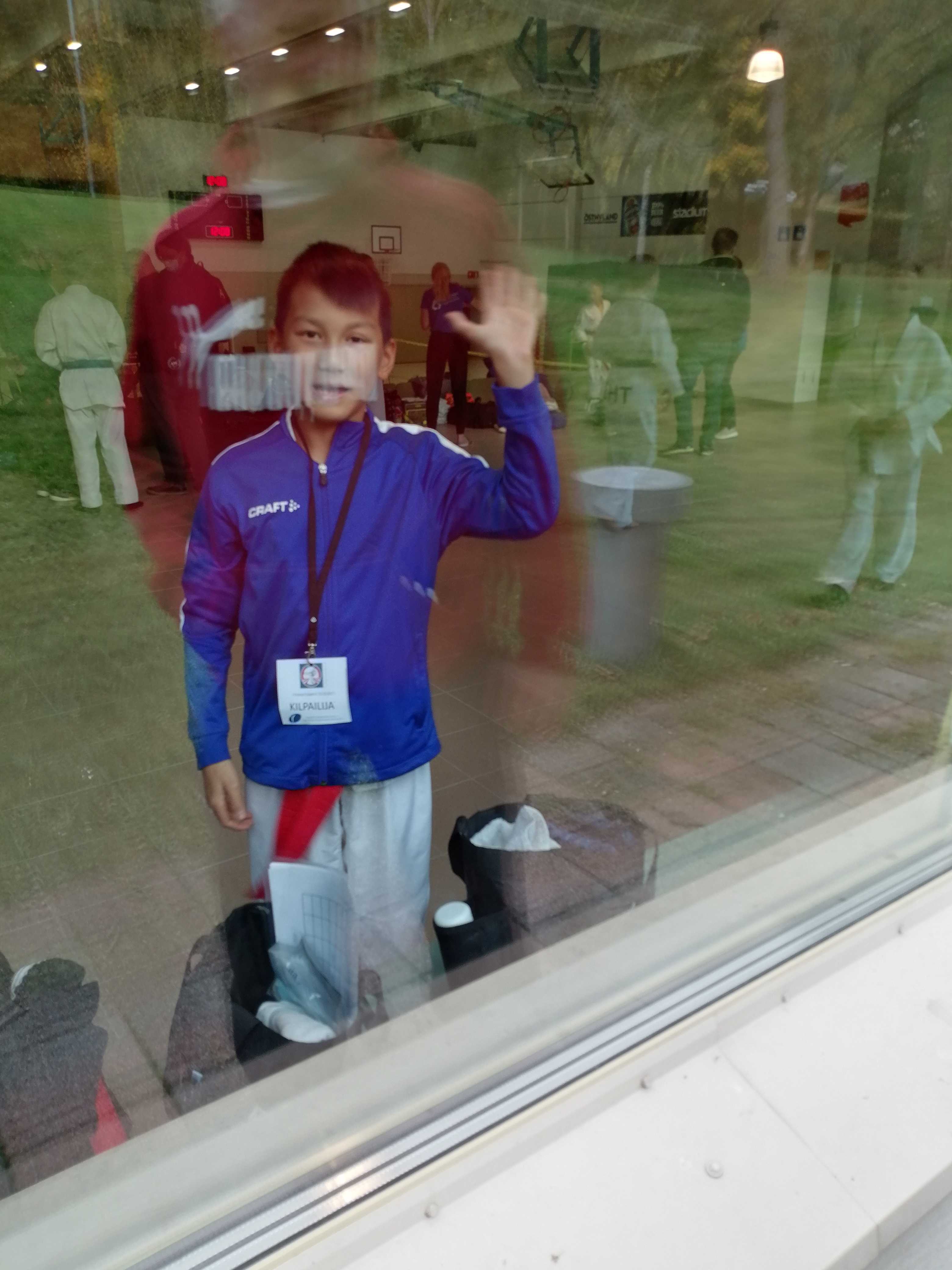
Porvoo Open 2020 was organized on October 3, 2020 at Porvoo Liikuntahalli. Corona overshadowed the arrangements and all athletes from the children's series (E/D) were excluded from the Taekwondo athletes. Because the race was small, several of our athletes also missed the series. However, the small team was capable of striking and, apart from a couple of annoying bumps, the day was a top performance.
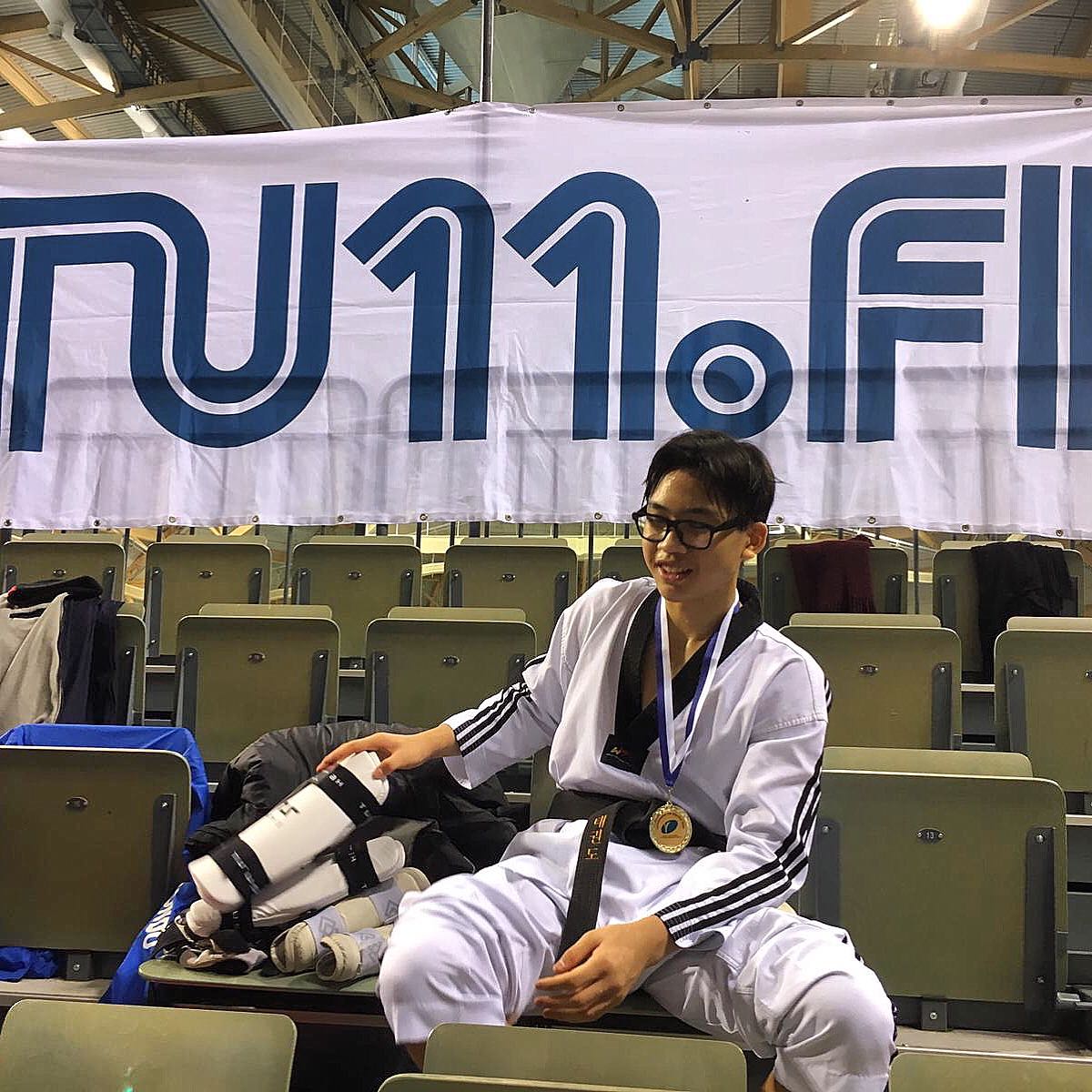
Markus Liuko (C -37 kg) took silver in his series. Two matches and a narrow final loss were a good indication of the development in the right direction.
Teemu Takala (C -48 kg) faced Frans Frangen and the tight match turned into Teemu's victory. Unfortunately, Teemu injured his leg in the match and did not make it to the second match of the pool. Silver for Teemu as well.
Honey La (B -68 kg) fought two matches and a gold medal was hung around her neck. The matches were exciting and Honey was able to improve her performance during the matches.
Plum and Lauri were drawn in their own series (B -68 kg) on the same side of the chart. At first, Plum took a clear victory over tall Miro Ulkuniemi. In the semifinals, Plum and Lauri met and the battle was quite intense. However, Plum was slightly better and the match was one of the best of the day. Unfortunately, the winner just injured his ankle and missed the final. Bronze for Lauri and silver for Plum.
Sara Quinos had no objection to the cadets or juniors. Thus, cadet-aged Sara fought amazingly in the adult heavyweight division (R +73). Even though Sara is an exceptionally talented and skilled fighter for her age, the age difference to women in her twenties is quite large in terms of physics.
Sara's grips were convincing and the opponents of course did their best, but Sara finally showed the place of the locker. Although the result was perhaps not surprising, the performance was still confusingly hard.
The race was completed with honor. However, some corona measures seemed excessive, even unreasonable. In the case of small children in particular, it would be important to take into account the security provided by your own carers in the future.
The long competition break was visible both in the arrangements and in the sports performances. However, our own judges Lex and Ali Lahti were remarkably sharp and deserve praise for their judging.
Valmentajan toiminut Sampo Pajulampi totesi: ”Tiivistetysti: hyvin meni. Saran voitto aikuisten sarjassa oli kyllä uskomaton veto noin yleisesti ottaen. Jos ois ollu järkevä arvonta Plumin ja Laurin sarjassa, ois siitäkin kulta ja hopea. Muuten kaikilla taso siellä missä pitääkin, eli kärjessä tai kärjen edellä.”
Mari Lapinsalo and Eddy Quinones also worked as coaches and things went smoothly throughout the day.
For the parents following behind the window, the situation was e.g. frustrating due to data flow problems. However, guardians play an important role in the Games from many points of view, and it will not do to be underestimated in the future.
Kai Oulejärvi was one of the enthusiasts who attended the most exercises in 2019. The hard work also paid off when Kai completed his 1st dan black belt.
Venne was by far the person who collected the most training marks in the entire club in 2019. The extremely talented young athlete showed his skills also on the match mat, e.g. by winning gold in the WC.
The player of the year was our club's best player in 2019. Especially the selection for the Olympic qualifiers was a wonderful achievement!
Already in 2019, Chahra was our most successful junior athlete both at home and abroad.
Christian was once again our number one player in the business series. The man is the top of the world, so why not the top of our club as well.
Alex made a breakthrough in the national team and won both the Championship and the domestic league.
Markus showed with his attitude and hard work that he is the name of the future in our club. The first SM gold of the match already shows that.
Cheer prizes were awarded to the following people as a thank you for their hard work and high-quality training:
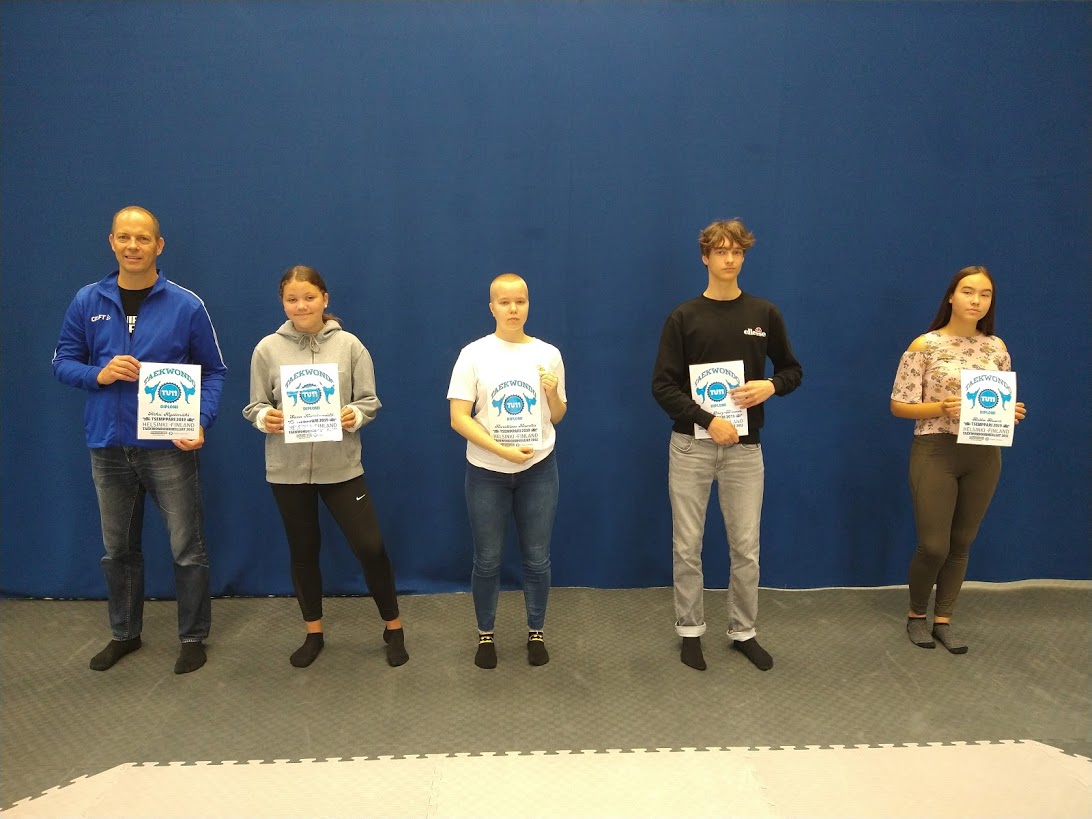
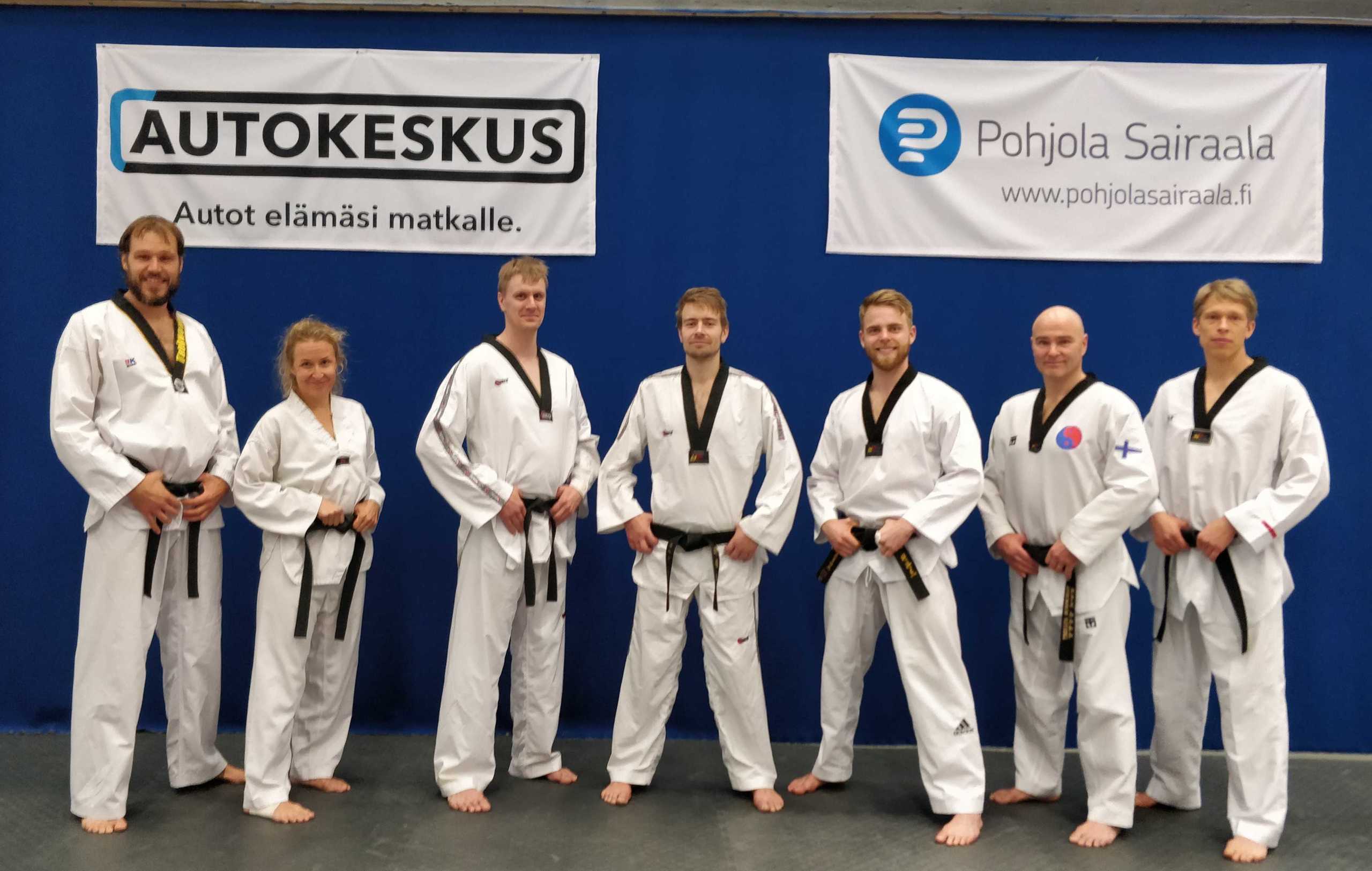
The recipients of the tsempari award who were there in a group photo
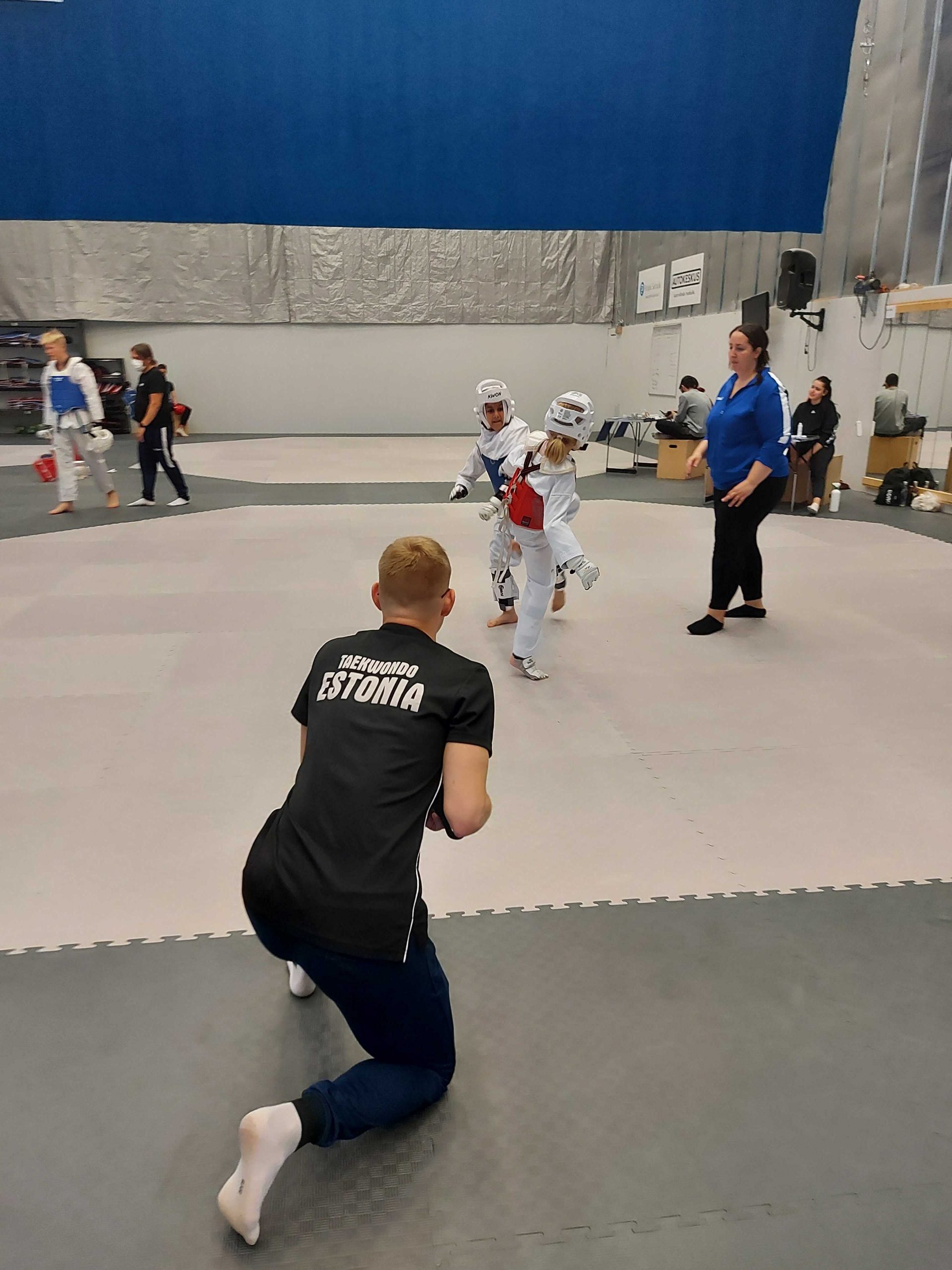
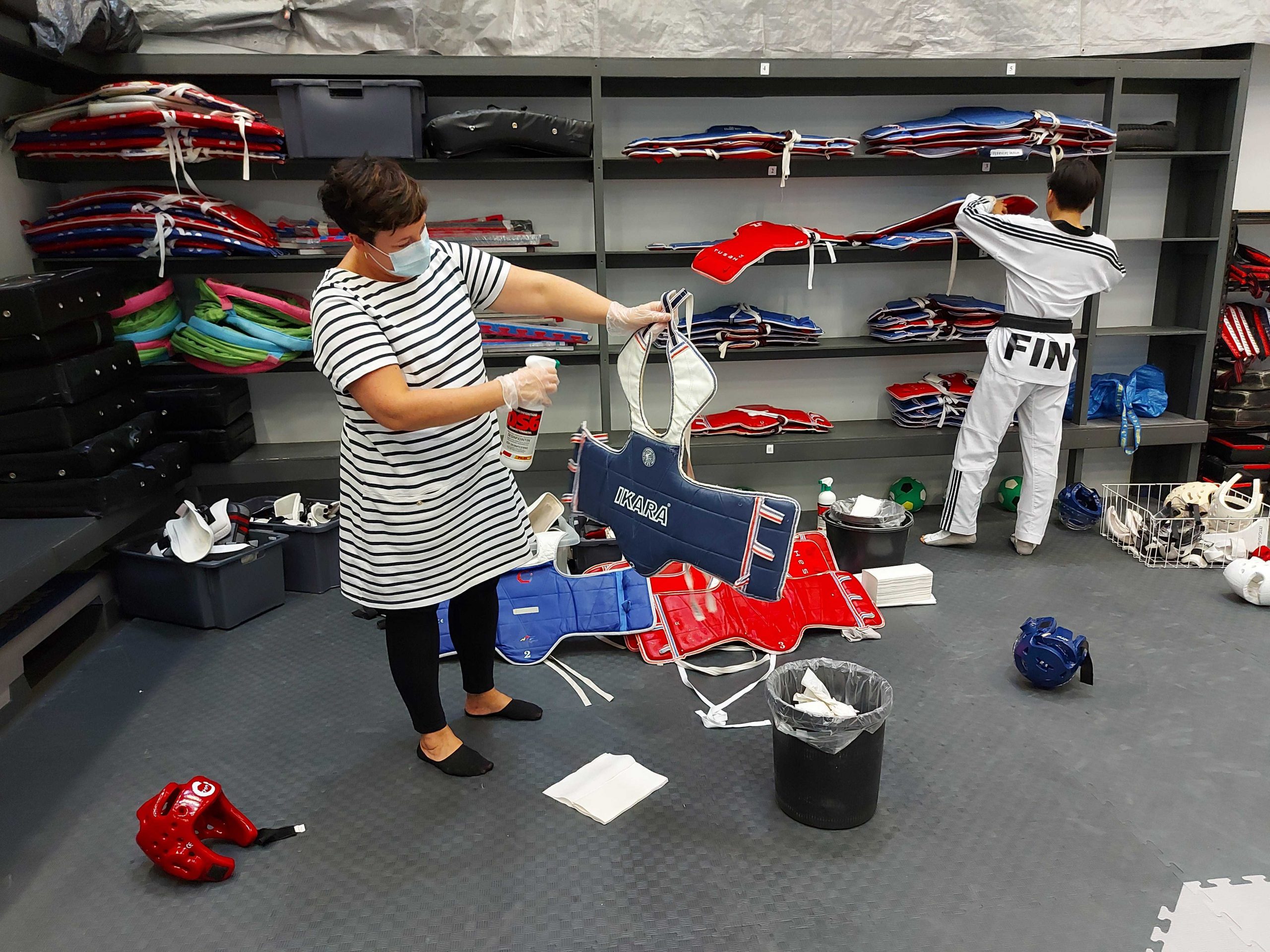
The first indoor competitions of the fall were organized under exceptional conditions as the threat of the second wave of the pandemic grew. However, careful disinfection, masks and good hand hygiene ensured that the games could go through. Older and more experienced athletes were in charge of the arrangements with Fatima and Sampo as judges.
We also had a few guests from Estonia and the cooperation will certainly continue in the future.
The club thanks the participants, organizers as well as long-distance guests.
If you want to support the activities of Taekwondo athletes, you can easily join as a supporting member. Pay the desired amount, however at least €10 to bank account FI5351610520054168 / Taekwondo athletes 2011 Ry. Enter the code "support", your name and your e-mail address in the message field:
Support
Mikko Mallikas
mikko.mallikas@gmail.com
Even a small amount helps us organize more and better physical activity opportunities for people of all ages.
We offer a wide range of cooperation opportunities for companies. We sell both individual advertising spots that we offer wider cooperation packages and development partnerships.
Prices for basic advertising spaces can be found from our media card. Contact Teemu Heino (teemu@tu11.fi.main.hoste.fi, 050 585 2011). Sampo Pajulampi helps with technical questions (sampo@tu11.fi.main.hoste.fi, 040 568 3470).
We are happy to tailor a package for our partners that meets your needs. We can combine advertising and our services into an entity that is just right for you. Contact Teemu Heino (teemu@tu11.fi.main.hoste.fi, 050 585 2011). You can familiarize yourself with the implementation of the cooperation in the Pohjola Hospital case below>>
Our main cooperation partners are currently Pohjola Hospital and Auto center.
Development partners work together with us to develop athletes using the partner's products or services. The cooperation partners are mentioned on the website and in suitable social media publications, and the products or services are visible in the everyday life of the athletes. Do you have a product or service that can contribute to the success of our athletes? Contact Sampo Pajulampe (sampo@tu11.fi.main.hoste.fi, 040 568 3470). Our development partner is currently Kick.AI, Punttisali.com and Pro Dobok Finland.
Kick.AI>>
Punttisali.com>>
Pro Dobok Finland>>
Pohjola Hospital and Taekwondo athletes 2011 have been partners since 2019. The goal has been to find a model, the game will benefit both Pohjola Hospital, the club and especially the enthusiasts.
Pohjola Hospital offers enthusiasts a clear treatment path in injury situations, you can familiarize yourself with it on the treatment path's own page.
Tekwondo athletes offer Pohjola hospital visibility both in the gym, on social media and in other communications, for example in its companion publication. In addition, we have organized training for coaches and instructors with the help of Pohjola Hospital's experts, and Pohjola Hospital's employees have been training on the occasion of TYKY Day. In addition, of course, we offer discounts on our services to employees of Pohjola Hospital.
Were you interested? Contact Teemu Heino (teemu@tu11.fi.main.hoste.fi, 050 585 2011).
In a private lesson, the enthusiast and the coach focus closely on the training of a single area, and the enthusiast receives immediate and continuous feedback on their performance. Because of this, we make considerable progress in just one hour. Private lessons are also held for two enthusiasts and for more enthusiasts.
In a private lesson:
See the training time that suits you from the training calendar >>
We have set the times in the calendar when our coaches are available for private lessons, but you can suggest a time outside of these as well.
Send an email to info@tu11.fi.main.hoste.fi and book an hour. At the same time, tell us what subject you would like to practice and we will book a coach accordingly. You can also book a lesson directly from the trainers in the gym. Race team members can use Slack to book an hour.
You can still agree with the coach about the details. We will send the invoice an hour after that. Get a training mark for the belt tests.
Reading is always worth it. That's why we compile coaching and sports literature for instructors and coaches to use. If you have unused literature in the field, you can bring the books to the shelf of Taekwondo athletes. In particular, we are interested in basic literature on general coaching, but actually all works dealing with sports and exercise are useful.
Do you have adequate protections? Is your dress appropriate? Together our partners Pro Dobok Finland with us, we have put together affordable protection packages for you. Below are also recommendations for suitable costume purchases for those who practice in different groups.
Get to know the protection packages and conveniently order them here>>
Those practicing in beginner groups can perfectly borrow protection from the club. They are worn but still usable. The suit suitable for practicing in the beginner group is SMAI Practitioner.
Suitable for advanced group members Basic hobbyist protection package, containing arm guards and shin guards. Suitable for a suit SMAI Practitioner or slightly more expensive SMAI Competitor or Tusah Easy Fit.
The most suitable for amateurs participating in advanced groups, amateur matches and indoor competitions is Active enthusiast's protection package, containing arm guards, shin guards, tooth guards, lower guards and match helmet. Active enthusiasts should also invest more in their suit, good options are e.g. SMAI Competitor or Tusah Easy Fit. In the amateur racing group of motion series, a suit used in other exercises is sufficient.
It is the right choice for those who participate in race training and competitions or those who aim for them Competitive athlete's protection package, containing arm guards, shin guards, tooth guards, lower guards, match helmet, match gloves and armor. A suitable suit for competitive athletes and advanced enthusiasts is SMAI Fight Pro or TUSAH Professional Fighter. When participating in business series competitions, a racing suit is also required. A good option is TUSAH Professional Poomsae.
Order protection packages here>>
The equipment for the taekwondo athletes is supplied by Prodobok Finland Oy, which operates in common facilities with the taekwondo athletes. When buying equipment, the invoice is Prodobok Finland Oy, not Taekwondourheilijat.
Please note that in addition to their own work, the instructors manage the hall's store. Therefore, reserve time and patience for shopping.
Take a comprehensive look at the products on Pro Dobok's website >>
Taekwondourheljat and Pro Dobok Finland offer protective packages for enthusiasts at a reduced price. Fill out this form and you will receive your equipment directly from the counter as a ready-made package! Of course, you can change the guards if the size is not suitable.
You can find the indicative sizes of the guards in the table below. If the size is wrong, we will replace the protectors, if you have not used protectors. The table shows the size of the protectors XS-XL and the height of the enthusiast. Round the length up.
| XS | S | M | L | XL |
| Under 140 cm | 140-160cm | 160-180cm | 180-190cm | Over 190cm |
When you receive your shelter package from the pick-up table, check that the shelters are the right size! If the size is wrong, we will replace the protectors if you have not used them.
Enter the correct email address, as you will receive the invoice to the email address you entered.
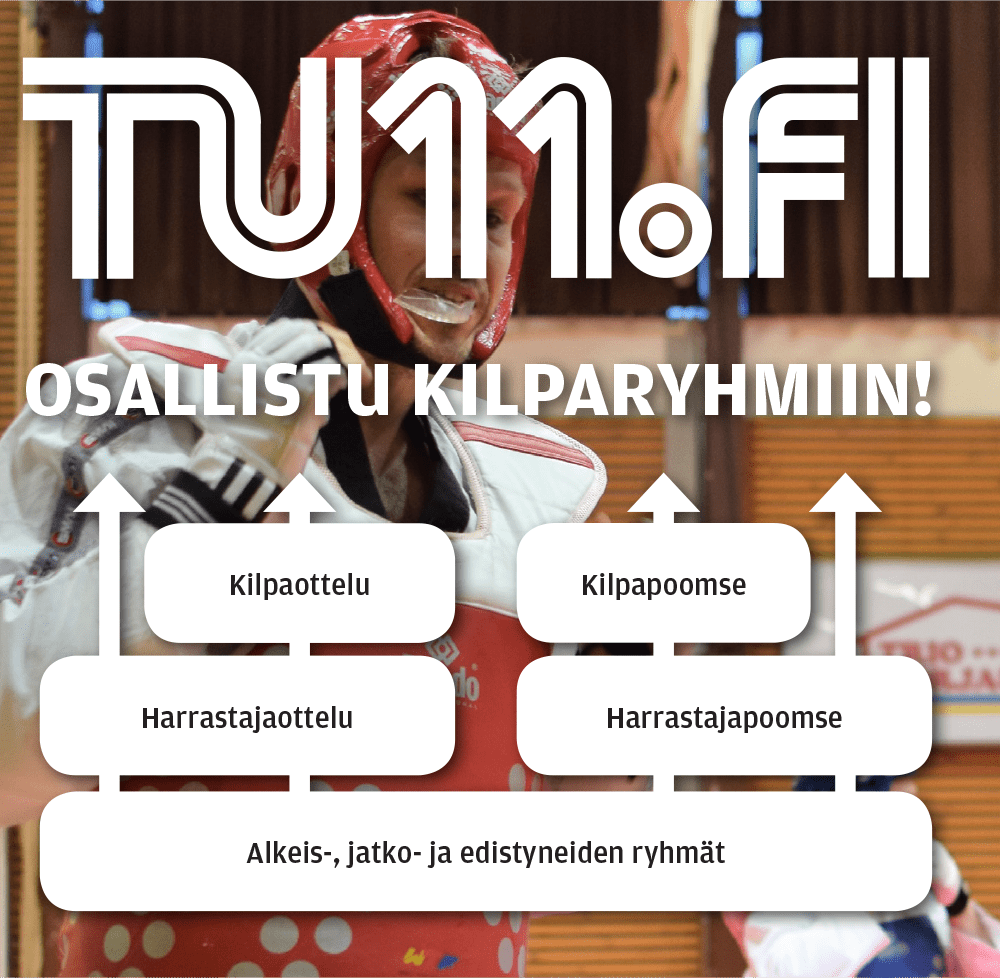
In taekwondo athletes, everyone starts in basic groups, from which coaches guide them forward. Already experienced competitors who continue their previous hobby in Taekwondo athletes move directly to competition groups. You can move from the basic groups to a try-out amateur match after only a few weeks of practicing. Basic skills are practiced in basic groups, which provide a good foundation for competitive hobbies and sports in the future.
After just a short hobby, the hobbyist can move to hobbyist racing groups. Their purpose is to familiarize the enthusiast with competitive taekwondo and the basic skills of sports. The threshold for the groups is low and participation in them is included in the basic hobby fee. In taekwondo, you compete both in a match and in movement series, and both have their own groups. In the beginning, it is possible and absolutely useful to familiarize yourself with both forms of competition.
You can participate in indoor competitions if you have practiced for about half a year in basic groups or have participated in amateur competition groups. Absolute beginners can also participate, but mastering the basic skills gives a better basis to benefit from indoor competitions. If the enthusiast does not yet want to try fighting or performing a set of moves, just coming and watching the event gives a good starting point for participating next time.
The idea of indoor competitions is to provide a way to get to know competitions in a familiar indoor environment. The rules are applied according to the experience level of the participants. At the beginning of the event, we warm up and go over the basics of the rules. The intricacies of the rules are clarified and how to act in a competitive situation is reviewed as the event progresses.
In the actual competition events, the athletes are divided into different series according to their experience level, and in the match, they are also divided into weight classes. The rules are applied to be suitable for beginners, e.g. head contact is not used in the beginner's series. At the competition event, the coaches help and support the enthusiast, trying to make the competition experience a positive one. Everyone is nervous about their first performances, but overcoming the tension and doing your own performance gives you the confidence to participate in more challenging tournaments.
After the athlete has tried his wings in amateur competition groups, indoor competitions and possibly also in real competitions, he can move on to competition groups. Commitment and training volumes increase as the hobbyist develops towards an athlete's lifestyle. Competition groups offer more and more training opportunities and the training fee is slightly higher. In addition, the members of the competition group have at their disposal e.g. free training sessions for independent training, support from a physio and occupational therapist and a gym at reduced prices.
Coaches support training and, especially for younger people, parental support becomes more and more important.
Once the start has been reached, the athlete has an open path all the way to the World Championships (match and movement series) and the Olympics (match). However, success requires perseverance and success at the top is behind hard work. Competing at the top national and international level is rewarding, however, and the acquired experiences carry far into later civilian life!