Categories
General

The racing season has started in Estonia.

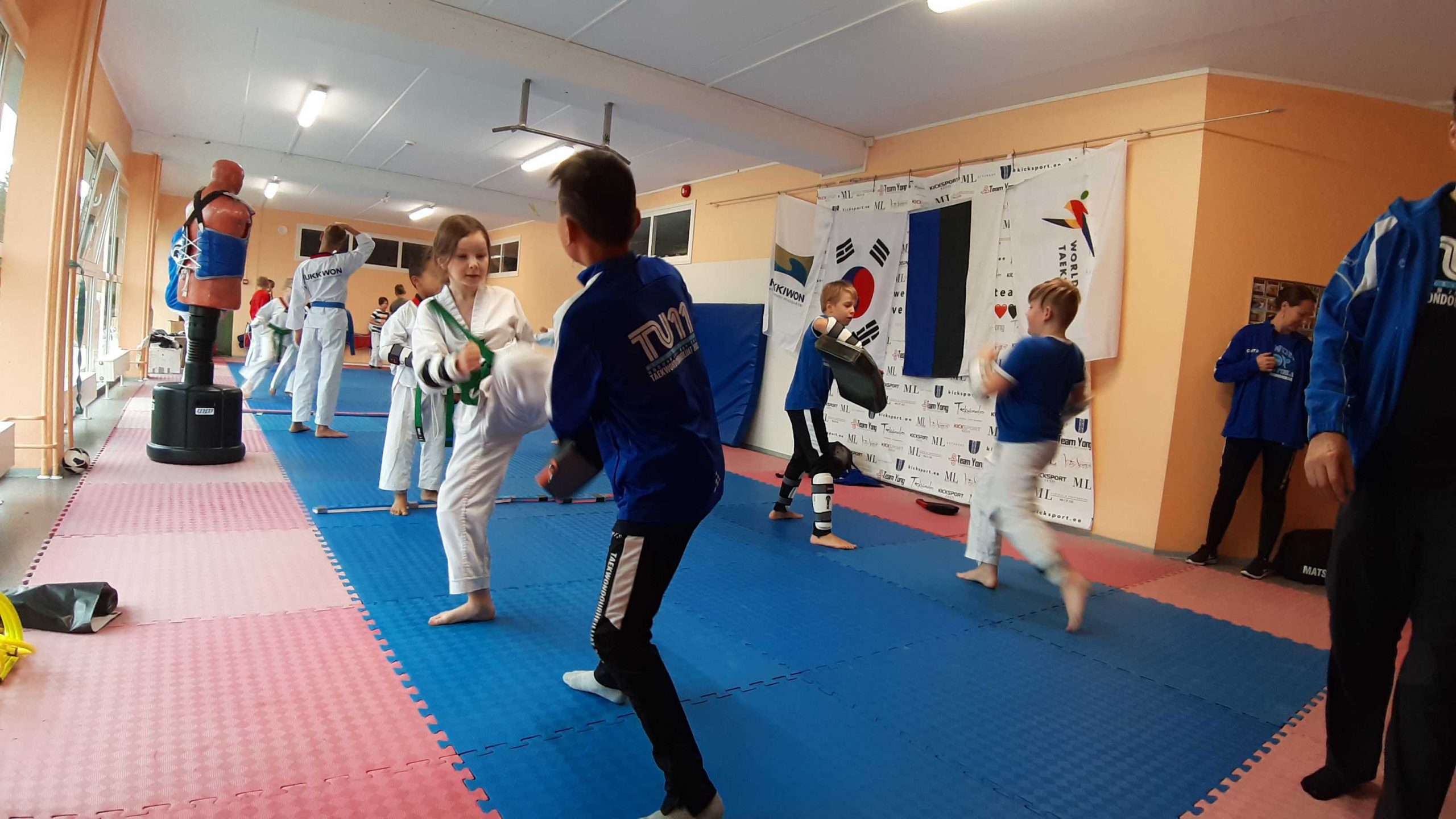
The competition season opened on 11.7. in Kunda, Estonia. The outdoor competition had to be moved indoors due to weather conditions, but the competition was successfully completed. There were first timers as well as more experienced conkers.

The best performances of the day were seen from Noel Viitaniemi in the children's under 27 kg category, for which he brought home a gold medal. In addition, gold came from the business series competition.

Luca Lonka (children -33 kg) jumped nicely despite the tough opposition. Silver from both the match and the business series.

Tuure Silver (children 2, -36 kg) took part in his first competition and had an even, great match against a more experienced guy. In the match, attention is especially drawn to good distances and creative solutions in situations. This is good to continue.

Egor Osadchiy (children 2, +40) brought home the bronze after a hard fight.

Markus Liuko (cadets -37 kg) finished second in his only match. The match was good though. In addition, Markus did a creditable job helping the smaller ones warm up.

Venne Viitaniemi (cadets -45 kg) also suffered a defeat despite an even fight.

Plum Kopisto (junior -68 kg) and Juuli Mankonen (junior -44 kg) both had good matches, but both suffered defeat.

Overall, the opening of the competition season was quite modest in terms of results. Almost half a year's break from proper couples training was visible in everyone's expressions. On the other hand, the basic level is still strong and with a little polishing, the result column will look completely different.

Thanks to the whole team and especially to the parents, who took care of the travel arrangements creditably. Mari Lapinsalo coached creditably.
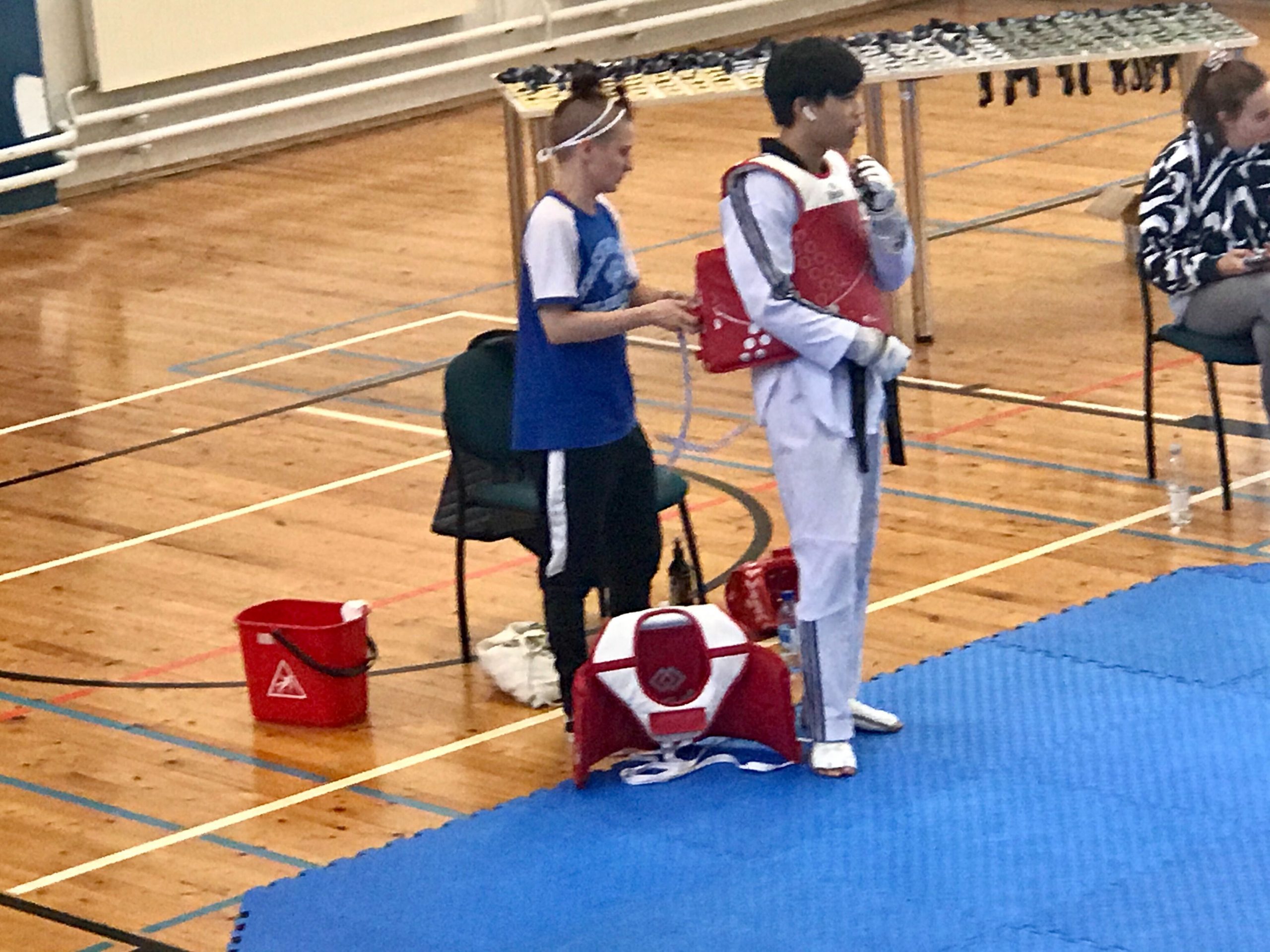
Plum Kopisto & Mari Lapinsalo

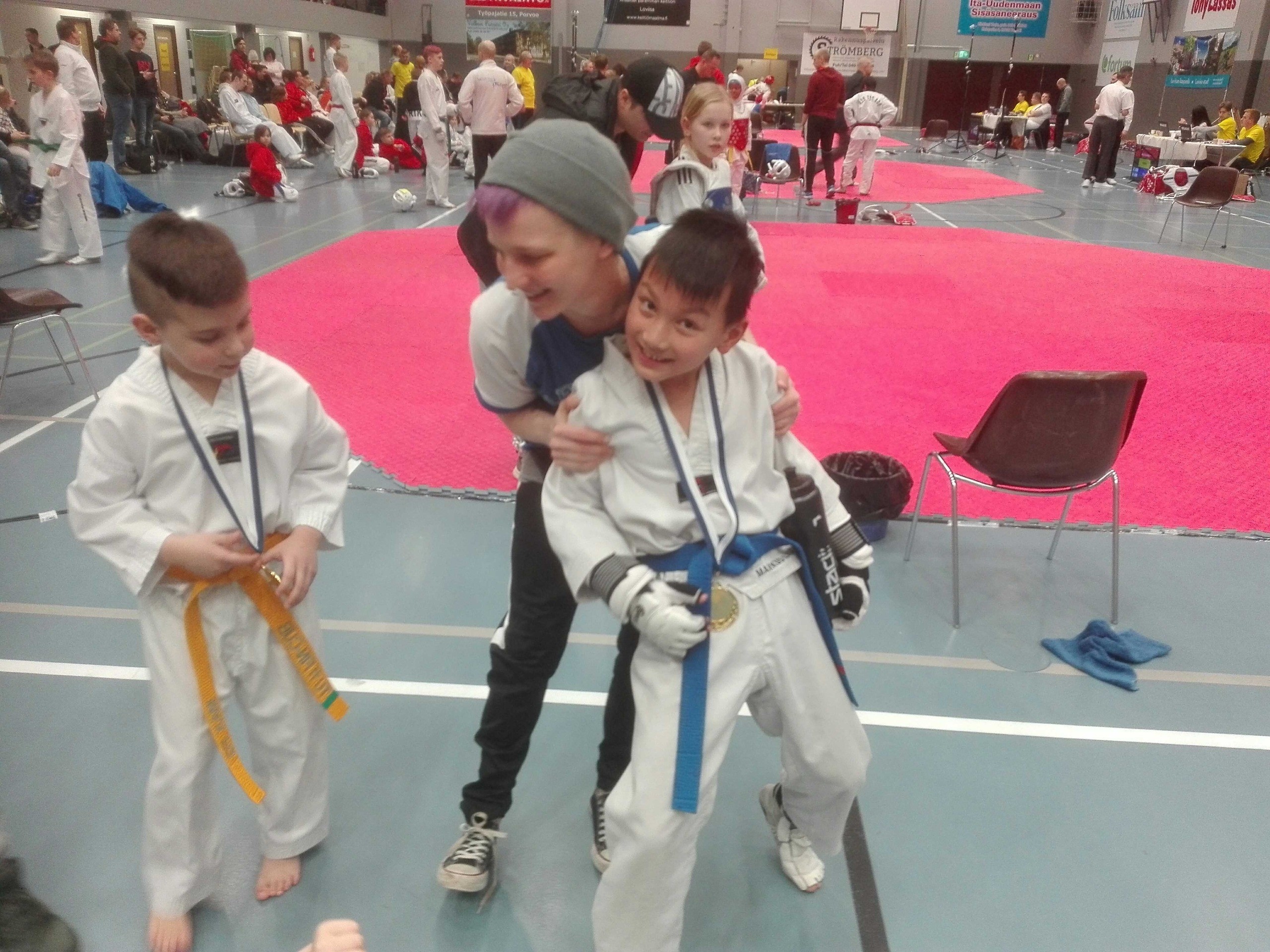
Luca and Markus

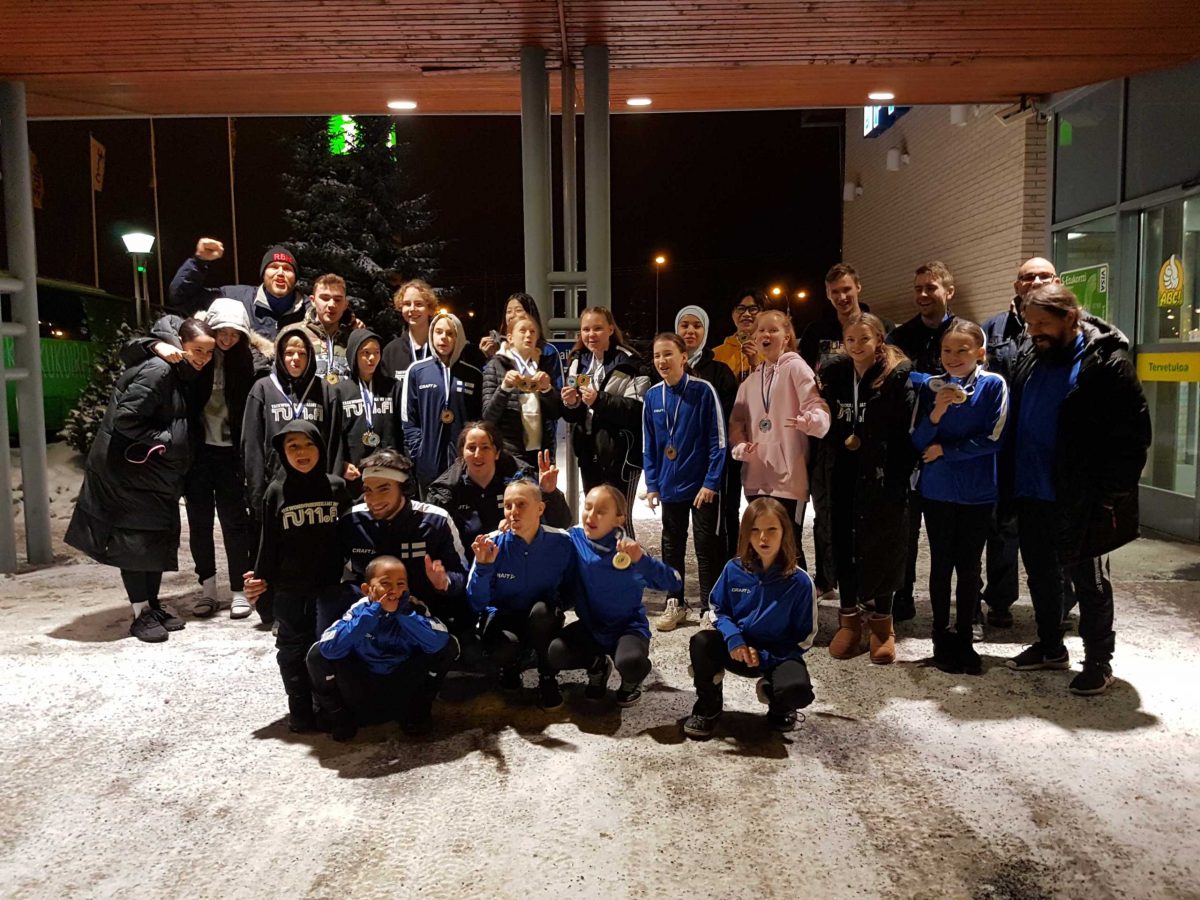
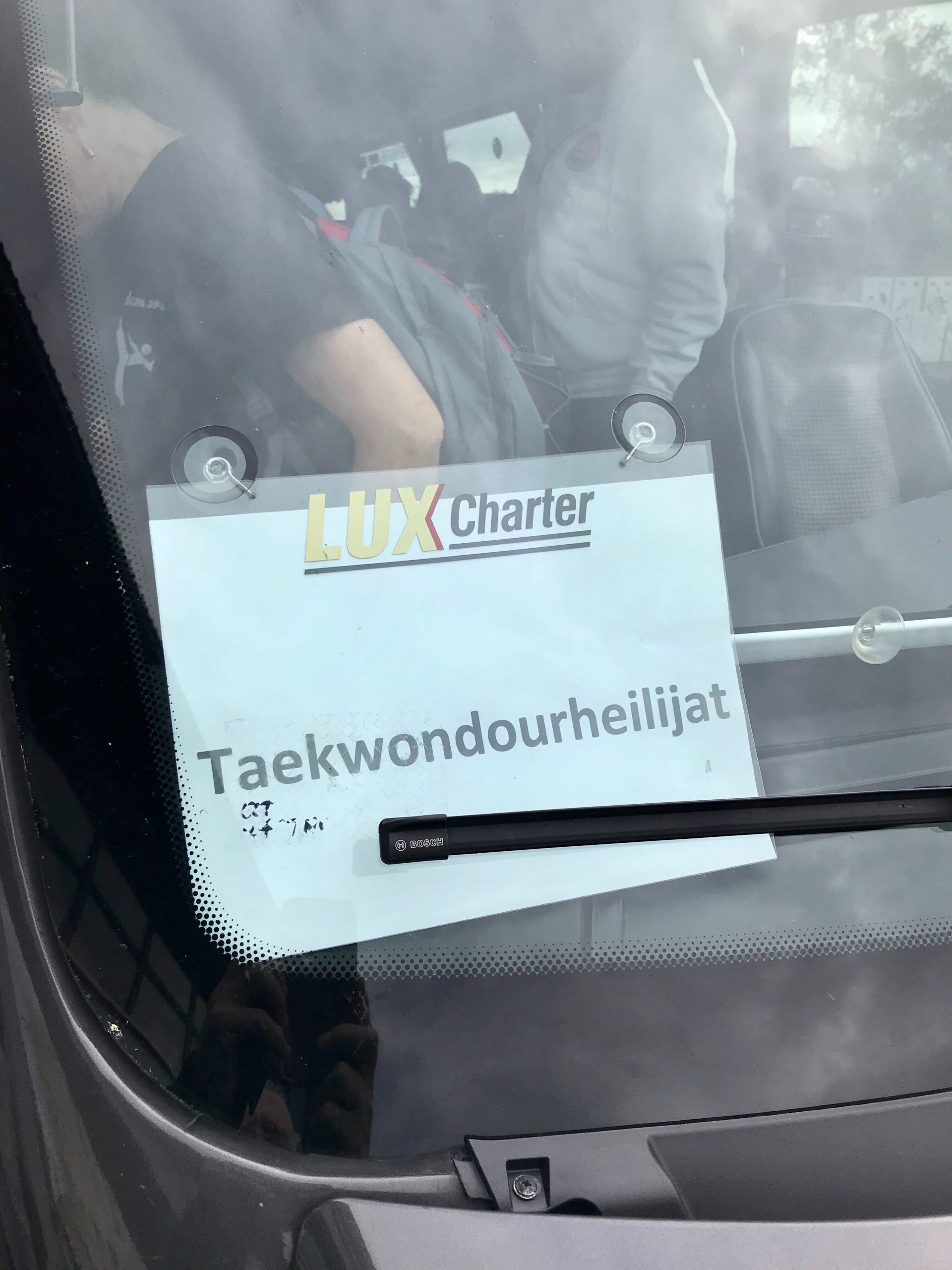
Let's go by bus

Categories
General

Already the 5th episode of Teemu's podcast

In this part, the nicest man award in the Nordic countries is won.

Categories
General

Seasonal publication 2020 is here!

The Seasonal Publication of Taekwondo athletes is ready and you can read it from here>>

There is an introduction of the club and stories about Punttisali.com, family hobbies and the World Championships.

Categories
front page Coaching blog

A quick guide to quick analysis of videos in a competition situation

First, a warning. Carefully consider whether it is worth doing quick video analyses. With an inexperienced or insecure coach, the analyzes may lead to the derailment of both his own and the coach's tactical thinking. It is more important to focus and prepare well for the match than to stare at videos and rewind things that are not necessarily relevant to the match. Remember that you cannot explain any jacket analysis to the athlete before the match, the message must be able to be summarized in three concrete action instructions, which the athlete believes he can and will be able to implement in the match. On the other hand, making analyzes can be practiced dry, and making them and communicating the results develops quickly. All you need to practice is a working internet connection and paper and pen.

In this article, I have outlined the use of video analysis in cadet and junior leagues. For adults, the situation is very different, because the logic of the G-ranking puts forward the world's top 20 athletes in the second round at the latest. In the case of these opponents, a quick analysis does not produce sufficient results, but a deeper analysis of the peaks and special features of the weight class should take place in the longer term already at home, so that it can be used already in training and its planning.

The situation is certainly familiar to all coaches who have toured the G-Games. Lists arrive at midnight and the opponents of the opening rounds are a bunch of unknown names. The wake-up call is before seven and the selection situation is difficult; should I go to sleep or start looking at opponents' videos on the internet. The most important and best advice in this article is this: go to sleep. When you are well rested, you are able to help the athletes the best.

Time is good in the morning. There is weighing, athlete dressing and everything else that is part of the race morning. Use idle moments to your advantage. Go through the opponents from taekwondo data, google search and then videos from youtube. Try to create a picture of the opponent's experience background, the conclusions serve as the basis for the analysis.

First judge the opponent by his general appearance. What is the basic tactic, what situations do you aim for and what is the uncomfortable area. Use your own tactical framework, which you know how to formulate in a way that your opponent can understand. Next, I will present my model that fits my own understanding of the match, which you can use as a starting point in your own work.

Choose the most suitable or at most two of the available clips. Try to find as much new material as possible. If the opponent's resistance in one of the videos matches your opponent's type, use it. Cut out matches where the opponent is a top-5-10 opponent in the world. In these, the underdog has often built a match-specific tactic with which he tries to win and the match does not describe his own match style.

I first examine the athlete's anthropometry and physical characteristics. I will start from here to think about the distances and the basic rhythm of the match. Usually, the match is played at four basic distances, which I call short (approx. 40 cm-clinch), half distance (approx. 40 cm-meter), basic distance (approx. meter between the front legs) and long distance (basic distance + approx. 30 cm). Depending on the weight classes, of course, centimeters are added or subtracted to the distances.

Then I go through the distance at which the opponent is good, i.e. scores points and defends best. And most importantly, how does the opponent get to the distances they want. Up until now, movement has therefore been analysed. This is the most important and often the most fruitful phase, because it is often easiest to find opportunities in the movement.

Next, I will go through the situational solutions, which foot to use, which technique and how to conclude the situation. In addition, it is important whether the contestant scores a point or points or not. You have to know how to distinguish constructive techniques and solution techniques and understand their combinations.

Finally, I make a walkthrough for the defenses. Where are the mistakes, why does the athlete lose points. It is important to watch the whole match. If the opponent is, for example, sensitive to taking warnings in some situation, you have to be able to take advantage of that.

One aspect that comes up from time to time, sometimes not, is the internal rhythm of the match. Some contestants are capable of rhythm changes, some are not. A cautious or aggressive start is important for some, while some are able to turn situations and matches around in the last set. You have to be able to communicate the rhythm to your coachee in one sentence.

The general guideline is to look for repetitions and find opportunities in them. Sometimes it works better, sometimes worse. It is important not to give too much weight to video analysis. It is a good aid, but the tactics must be built on the strengths of the opponent, and by no means based on the events of a single or a few videos.

Categories
Coaching blog

JOY - the key to coaching

Taekwondo carries with it many traditions and customs. It would be easy to write down platitudes about various connections between sports and spiritual growth and the role of the teacher in the growth of the student.

Modern competitive sports require appropriate thinking.

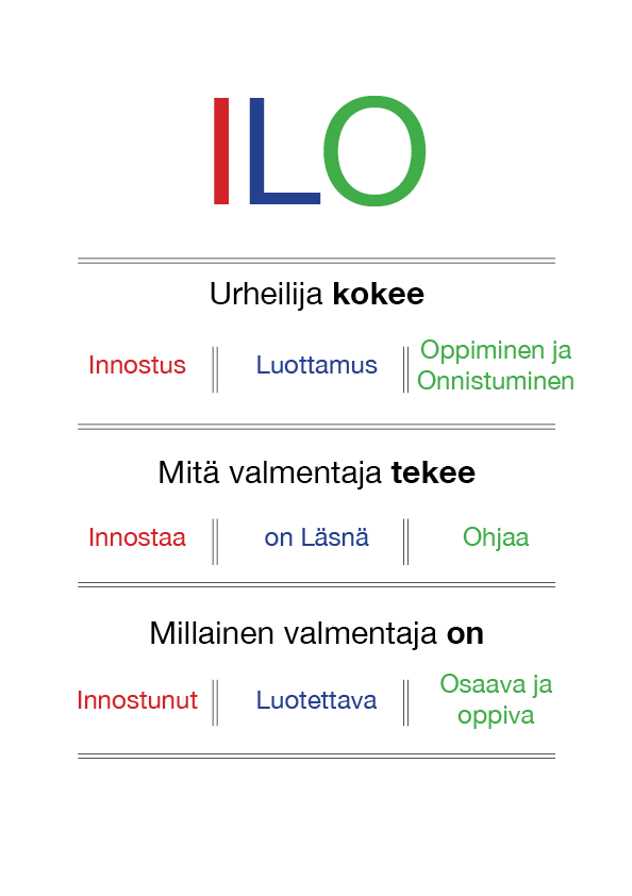
The athlete's experience is central

The athlete must feel that the sport is meaningful. It is only possible if the athlete is enthusiastic about the things he does. Sometimes sport is hard and in that case the enthusiasm for doing it yourself carries better than, for example, gathering strength from the results.

Enthusiasm is protected by confidence. Trust has two dimensions. The first is trust in the community and especially in its central players. The second is partly born from the first and partly overlaps with learning and success, namely the athlete's confidence that he is doing the right things.

Succeeding and learning as an everyday experience is a more important factor in terms of career success than achieving individual big goals, although they also have their own value.

The coach feeds the athlete's experiences

The coach must strive in his work to help the athlete to be at his best. However, it is reasonable to limit what to do and focus on the experiences that have been found to be central.

The coach inspires the athlete. The key is to understand the drivers of enthusiasm in different age periods. A child and a peak adult can have very different reasons for playing sports. However, there is no reason to value different reasons too much over others, but to feed them and give opportunities to find new ones.

The coach is present in the everyday life and celebration of the athlete's sport and, of course, as a support when the athlete faces difficulties and disappointments. With his presence, the coach creates a safe environment. An athlete can succeed and fail safely when he knows that support is available in all situations and conditions. The coach also takes care of the conditions in which they work together with the athlete.

The coach guides the athlete to do the right things. This leads to experiences of learning and success. Often, traditional coaching education focuses only on developing the physique and teaching the skill, but since the athlete is not a machine, simply tuning the performance is not enough. The coach must help the athlete utilize his mental resources and provide a comprehensive toolkit for working in the field of sports.

A coach needs to develop and develop

A coach must be enthusiastic about his work. He also shares his enthusiasm around him, not only to the athlete, but also to the entire surrounding community. Enthusiasm is a key condition for a coach to continuously develop and, on the other hand, cope with daily work.

The coach must be reliable so that the athlete can commit to doing things together. It is also easy for the surrounding community to commit to supporting the athlete, when the coach is able to give guarantees of continuity and the credibility of the task system.

A coach must know how, but it is even more important to learn constantly. All coaches are bad at first, but only those who have a strong aspiration to learn and develop as a coach can become top coaches.

Categories
Coaching blog

Individual training in a group - the coach's role and duties

Taekwondo is an individual sport that is almost always practiced as a group. This often seems a bit contradictory to coaches and enthusiasts of other sports, but when you think about it further, it's actually a pretty smart system

Belonging to a team

It is important for a person, and especially a young person, to belong to something. There can be different reference groups at the same time. A sports team as a reference group can be very strong. Its meaning can be reinforced from the outside, for example, with common rituals and common external signs. However, emphasizing the team as the only correct reference group can be detrimental to the athlete's later development, as leaving the team can be a traumatic experience.


However, it is important to strengthen the team's internal cohesion. Problem situations should also be tackled immediately, at least before they grow into crises that undermine the unity of the entire team. It is also worth emphasizing the tolerance of other people's ways and characteristics. When working in a sports team, it is important to understand the usefulness of helping others and reciprocity for your own success.

Team structure

Teams or fixed training groups are generally very heterogeneous. Only the national team groups of the top countries and, for example, the Korean university and professional teams consist of very uniform groups. In Europe, however, the national teams are not, as a rule, the central training environment, but the work is done in one's own club team.

Example of team composition (Finland):
Girl 10 years old, national level, 4 years of training
Girl 13 years old, international competition level, 6 years of training
Girl 12 years old, international competition level, 4 years of training
Boy 15 years old, international level, 5 years of training
Boy 12 years old, international competition level, 5 years of training
Boy 13 years old, international level, 4 years of training
Boy 16 years old, international level, 7 years of training
Male, 20 years old, national level, 6 years of training
Male, 28 years old, international competition level, 12 years of training
Female, 22 years old, international competition level, 9 years of training

The pack is mixed not only by the differences between genders and age groups, but also by the different physical and tactical requirements of the weight classes.

Training content and variation within the training

The coach has to constantly modify the exercises according to individual needs. Every athlete has different needs and situations. The planned content of the exercise is the framework within which the transformation takes place.

The coach is a kind of orchestra leader, but the orchestra does not play Wagner, but heavily improvised jazz. Everyone has to bring out the best of their own sound, fueling virtuosity.

Different roles in the group

Each athlete has his own role in the group. The role is partly situational, i.e. the role can vary in different situations.

The coach must form an understanding of these different roles. An understanding of group dynamics serves as a tool that can be used to strengthen desirable behavior and suppress undesirable phenomena. However, this is only possible if the coach has authority.

It is important to identify the group's opinion leaders and those who have an exemplary role. By influencing their attitudes, the entire group can be influenced. Incentives and punishments are also tools. If the control over the group is good, the incentives are enough to be given responsibility and the punishment is to be ignored in the training situation.

The coach's authority

The coach must build his authority through trustworthiness. Competence is one side of this coin, empathy is the other. Although the worlds of a coach and an athlete can be very different, the coach must sense the reflections of the athlete's reality on training and team activities.

It is impossible for a coach to build authority without good self-knowledge and recognition of one's own weaknesses and strengths. The coach must be honest, even when he makes mistakes and when he is, for example, tired, sad or in a bad mood. Young people can easily spot pretense and fake confidence. When the young people notice the existence of the cardboard backdrops, the first one is already digging out a sytkäri from his pocket.

Requirements for the coach

In training, the coach should:

  • To know each person to be coached both as a person and as an athlete
  • Find more general goals that are common or that support most sub-goals
  • Shows everyone their own perspective on the exercise, so that the exercise retains its meaning for everyone
  • Takes into account the special characteristics of each athlete in communication
  • Considers every athlete in a training situation
  • Gives everyone space and opportunities to develop

Other requirements of the coach:

  • Must understand group dynamics
  • Be able to manage a group
  • Be credible in what you do
  • Have good self-knowledge and develop it constantly
  • Know your stuff
Categories
Coaching blog

Links

There is a lot of coaching information on the Internet, both good and bad. We have compiled a few relevant links below.

General training

First, the International Olympic Committee's athlete portal, where the amount of information you can find is staggering. You should log in as an athlete to get the latest updates and e.g. invitations to online seminars.

https://www.olympic.org/athlete365/

A slightly similar domestic site is Terve Urheilja. A lot of good stuff, although considerably narrower than the previous one.

https://terveurheilija.fi/

You can also find a lot of useful information on SUEK's website. And of course https://puhtaastiparas.fi/ - online training is mandatory for national team groups.

https://www.suek.fi/


Taekwondo

On the website of the Finnish Taekwondo Association you can find a lot of useful, if a bit difficult to find, things. The most important things for athletes and coaches can be found in the Enthusiasts menu, which is a bit confusing. You should check the news every week.

https://www.suomentaekwondoliitto.fi/

In particular, it is worth highlighting the material portfolio, where you can find a lot of material of varying levels.

https://www.suomentaekwondoliitto.fi/harrastajille/materiaalisalkku/julkaisut/

The history part is a tough thing.

https://www.suomentaekwondoliitto.fi/mita-on-taekwondo/historia/

A good package about history in English.

https://karate2sentena4.wordpress.com/2011/12/14/storming-the-fortress-a-history-of-taekwondo/

When looking at international fields, a good starting point is GMS, WT's international membership system. Here you can find international ranking competitions and value competitions as well as the current rankings of athletes.

https://worldtkd.simplycompete.com/

The website of the World Federation also has a lot of useful information, e.g. up-to-date rules.

http://www.worldtaekwondo.org/

The website of the European continental confederation also has necessary information, especially about the European Games.

https://www.worldtaekwondoeurope.org/

If you want to explore the careers of different athletes, the best address is Taekwondodata. The site is a good starting point for opposition analysis in international tournaments.

https://www.taekwondodata.com/

There are few news sites about the sport, but at least MasTaekwondo is worth following.

http://en.mastkd.com/

Inside the Games also produces interesting material.

https://www.insidethegames.biz/sports/summer/taekwondo

Actual coaching knowledge is scarce. Especially in Finnish, the offer is really thin. Kim Sinisalo's blog is an absolute source of information. In particular, it is worth highlighting 4 blog posts that everyone interested in the sport should read.

http://ventrikkeli.blogspot.fi/2012/03/alyn-ja-luovuuden-renessanssi.html
http://ventrikkeli.blogspot.fi/2012/04/painavan-kivijalan-tie.html
http://ventrikkeli.blogspot.fi/2012/06/tekniikan-maailma.html
http://ventrikkeli.blogspot.fi/2013/10/taekwondon-pelivalmennus-yleisesittely.html

Finally, let's raise our club's own tail a little and recommend Teemu Heino's blog, where various aspects of the sport are discussed in well-thought-out writings. The pace of publication is calm, but the content is even tougher.

https://hojomi.es/

Happy reading moments!

Categories
front page Slider Newsletter General

Discord

[vc_row][vc_column width=”1/1″][vc_column_text]TU11 Discord löytyy nyt sivuston valikosta. Salasana on sama kuin virtuaalitreenihinkin. Jos olet maksanut harrastusmaksusi, etkä ole saanut salasanaa, pyydä sitä emaililla info@tu11.fi[/vc_column_text][/vc_column][/vc_row]

Categories
front page Slider Newsletter General

Virtual lessons for those who have paid the training fee

[vc_row][vc_column width=”1/1″][vc_column_text]

Virtual classes offer activities when the hall is closed

Virtual classes offer activities when the hall doors are closed. There is a wide range of things on offer, from side exercises to sports training.

You can watch it here from the link>> or by clicking the menu in the upper right corner of the page.

All those who have paid the training fee have received a password with the newsletter. If you have not received your password, please contact us info@tu11.fi.[/vc_column_text][/vc_column][/vc_row]

Categories
General

Information for taekwondo athletes regarding covid-19 (March 16, 2020)

[vc_row][vc_column column_width_percent=”100″ gutter_size=”3″ overlay_alpha=”50″ shift_x=”0″ shift_y=”0″ shift_y_down=”0″ z_index=”0″ medium_width=”0″ mobile_width=”0″ width=”1/1″][vc_column_text]

Information for taekwondo athletes regarding covid-19 (March 16, 2020)

Due to today's decisions of the Finnish government, the club's management has decided to close the hall for the time being. The continuation will be announced when we know about the effects of the preparedness act on the conditions of operation.

Athletes preparing for value competitions can train independently by agreeing a suitable time with Paul.

We want to encourage enthusiasts to move as much as possible. You can find training videos here.[/vc_column_text][/vc_column][/vc_row]