Categories
General

Road to Paris

[vc_row][vc_column width=”1/1″][vc_custom_heading]Taekwondourheilijoiden tie Pariisin Olympialaisiin 2016[/vc_custom_heading][vc_single_image media=”10534″ media_width_percent=”50″ alignment=”center” advanced=”yes” media_overlay_opacity=”50″ media_padding=”2″][vc_column_text]Tavoitteet:

  • 1-2 athletes to the Paris Games
  • All four Finnish qualifiers / passers represent our club
  • A team of 2-6 athletes from our club will be selected for the qualifiers
  • Raising the level of the entire operation

Key measures

  • Hiring an Olympic coach
  • Comprehensive planning for the entire episode
  • Investing in support activities for athletes

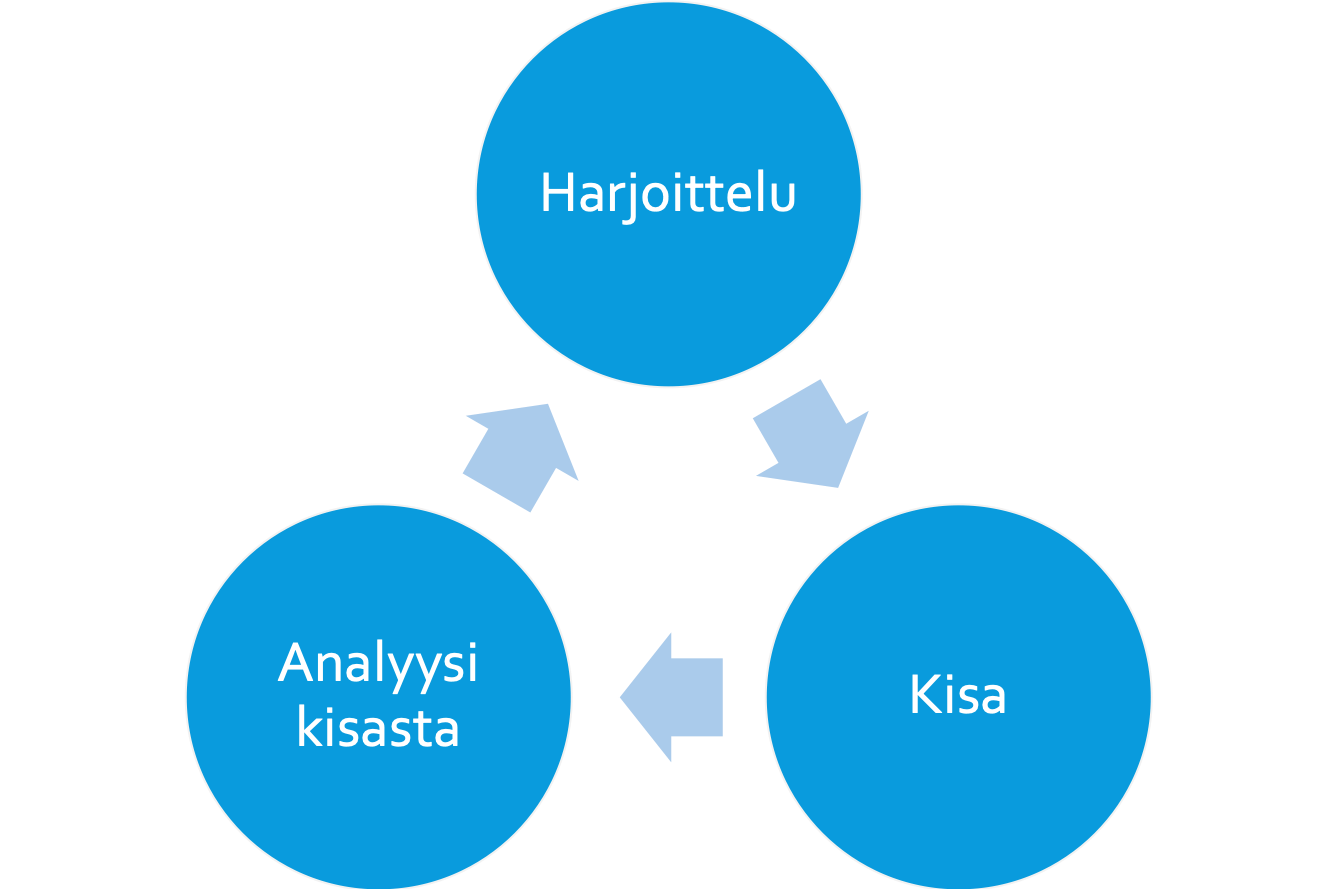
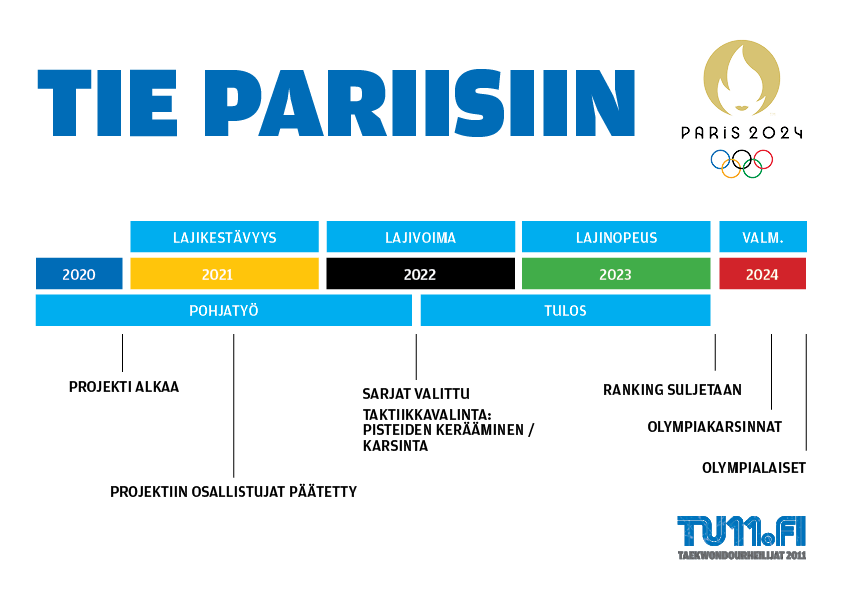
The picture shows the basic map of Taekwondo athletes on their way to Paris. The training is based on a megacycle with 3 main themes. In addition to this, the period is divided into foundation work and result periods. The purpose of the results period is to gather sufficient competitive experience and possibly also the points required to get to the games and be successful there.[/vc_column_text][/vc_column][/vc_row]

Categories
Coaching blog

Four key characteristics of an athlete and the main lines of their development in coaching

Four key characteristics of an athlete and the main lines of their development in coaching

The terms used in this article are generally used in coaching literature, but even there the terms are not always clear or have been given different interpretations. That is why here we have tried to open up the terms used and explain them in the context of club coaching.

The presented models are rules of thumb, a competent coach can deviate from them drastically if he knows what he is doing.

About the program in general

The physical focus of the training is presented in the program. The same exercises and exercises can develop different qualities if they are implemented in a different way, but the coach should have a clear idea of what is being developed at any given time.

When you want to develop qualities, the athlete must know the exercises. That's why it's good to include partial performances already in the warm-ups. Dividing the exercise into separate teaching and work periods can also make sense, especially in harder exercises. Teaching the skill during exercises is also possible if the intensity of the exercise is low.

1. Species resistance

In this context, sport endurance refers to the specific endurance characteristics needed in competitive taekwondo. Endurance qualities are needed both during the match and in the recovery between matches.

When practicing sport-specific endurance, the rhythm of the work and rest periods of the exercise plays a central role. It is good to use the rhythms used in the competitive performance of the sport. 3×2 min. /1 min. return and 1.30/30” serve as starting points. The pacing can be lengthened if more basic endurance characteristics are sought and shortened when maximum or speed endurance is sought, as the power increases in shorter periods and decreases in longer periods.

Within the work cycle, the power and rhythm of the performances may vary depending on the repetition of the cycles. The more cycles there are, the lower the intensity within the work cycle. After training, the athlete is clearly tired, and is unable to perform full-strength training. Roughly, it can be said that after a good, developing workout, the athlete should focus on restorative exercises and restorative stretching.

Key exercises:
  • Different task spars or spars for kicking goals.
  • Different sets of kicks with a rhythm suitable for goals.
  • Paired exercises in which the given pattern is repeated
  • Various sprints, possibly combined with sport or skill sections
  • Various jumping or jumping sets
Skill development:

When doing endurance, the coach should encourage maintaining quality. When doing a lot of repetitions, the technique tends to break down and errors become more prominent. On the other hand, large numbers of correctly performed repetitions establish the methods of performing the technique.

Mobility

It is difficult to develop mobility in connection with heavy endurance exercises. That's why possible developing sections must be placed after the warm-up, before the actual effective work periods. In lighter exercises, you can develop dynamic mobility, e.g. in the form of leg swing fitness circuits.

2. Sport speed

Sport speed in taekwondo consists of two elements. Reaction speed is the time measured from the stimulus to the start of the performance. Movement speed again, time is measured from the beginning to the end of an individual performance. In training, it is natural to combine these and separate them according to the exercise.

When moving on the border between speed endurance and speed training, you can do the limit pull roughly so that the speed endurance training is longer (>approx. 6-10 sec., even 20-30 sec.) and the recoveries are shorter (<20") and there are more repetitions (>5- 10 in a series) so that the muscles get tired during the exercise. Speed training, on the other hand, aims to affect the nervous system and the maximum contraction speed of the muscles. Runs are short (<10 sec) and repeated less in a set (usually max. 10) and returns are long (>20", even 1' or more). Serial returns can be up to 5'. The purpose is to fully return to the active heart rate between sets, and even within the set, the heart rate must stabilize at least somewhat. The higher the heart rate goes, the longer the recovery should be.

Speed training requires a light but sufficient warm-up. Mobility should be brought to at least the level of competition performance. An hour-long exercise can take even less than 15 minutes. a sustainable section that develops speed characteristics, leaving enough time for warming up and cooling down.

The exercises are performed with high power, but paying attention to the relaxation of the performance. There must be sufficient recovery between performances and the performance must be short.

Key exercises:
  • Reaction exercises for different goals
  • Reaction exercises with a couple
  • Short sets of kicks given to goals
  • Jumps and combinations of kicks and jumps
Skill development:

As a rule, the exercises must be easy enough for the athlete to be able to practice the characteristic. However, a well-controlled technique may require modification, especially in reaction exercises, a good example being changing distance.

Mobility

Mobility can be developed in the preparatory parts of the exercise. In the parts that can be recovered, it is worth remembering that even if the athlete does not necessarily feel tired, his nervous system is strained. For this reason, restorative stretches should not be too demanding.

3. Species strength

Sports power is the ability to produce force during sports performance. This is especially important in terms of the impact force of kicks and punches and when making changes of direction. Strength is also needed to control the body in sports performance as a whole.

Sport strength can be practiced either indirectly or directly. Indirect exercises are very close to sport performance but contain general strength-building exercises. Direct exercises, on the other hand, are sports performances to which resistance has been added in some way. Forms of exercise are, for example, additional resistance exercises using various fitness circuits and aids. The starting angles of different performances can be exaggerated, and different podiums or obstacles can be used as help.

Traditional muscle fitness circuits should always be carried out as sport-specific as possible or using sport-specific sections (squat + kick instead of only squat) and in interval format, due to the interval style of competition performance. Leg swing fitness circuits should also be practiced. The gym has a good selection of rubber bands for additional resistance. Fitness balls and kettlebells can be found in the weight room.

Key exercises:
  • Fitness circuits
  • Additional resistance training
Skill development:

When training strength, you have to focus on the right performance methods. Especially when combining sports technique with exercises, you should be careful that the techniques are performed correctly to minimize the risk of injury. It is also important to learn to stick to the techniques even when the muscles are tired.

Mobility

Mobility training goes well with the strength sections. However, it is worth doing restorative sections and shakes between strength sections and developing stretching.

4. Mobility

Mobility is an important feature in taekwondo. Mobility is divided into passive and dynamic mobility. An example of passive mobility can be, for example, splits and dynamic high kick. Passive mobility requires only the mobility of joints and muscles, while active, dynamic mobility requires strength from the muscles and coordination from the nervous system to perform.

Mobility is constantly practiced in all exercises, either developing or maintaining it. Developing mobility exercises are usually connected to otherwise lighter exercises, while maintaining/opening mobility exercises are done in harder exercises where the purpose is to develop other qualities.

Especially in the last few weeks, attention is paid to the development of passive mobility.

Endurance and strength cycles develop dynamic mobility as described above. During speed periods, mobility is maintained during warm-ups and recoveries.

Mobility as a characteristic develops slowly, especially young people in the growth phase may lose their mobility at a certain stage, despite extensive mobility training. However, with regular exercise, mobility improves as long as the body stops growing. Mobility is also a very individual characteristic, some people naturally have it much more than others.

Categories
front page Slider General

Gold for Sara and Aino and Teemu from the match's PM competition

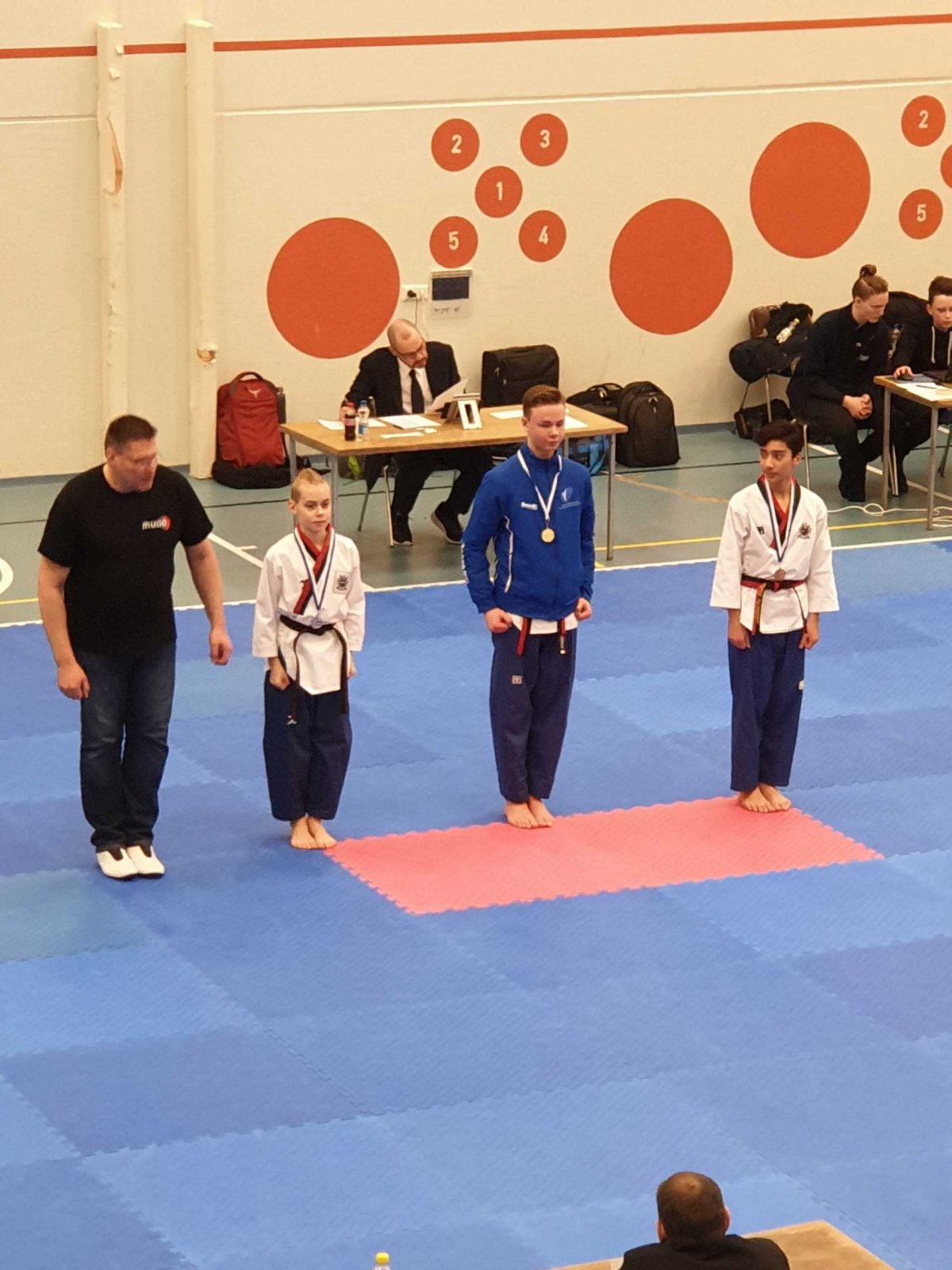
Sara Quinones and Aino Kortelainen and Teemu Haino took gold in the PM Games organized in Reykjavik, Iceland, on the first day of which the medals were awarded in a match. Plum Kopisto took silver and Venne Viitaniemi took bronze. Severi Sarala and Alina Shor were left out of the medal places this time, Severi's final ranking being 4th and Alina's 5th-8th.

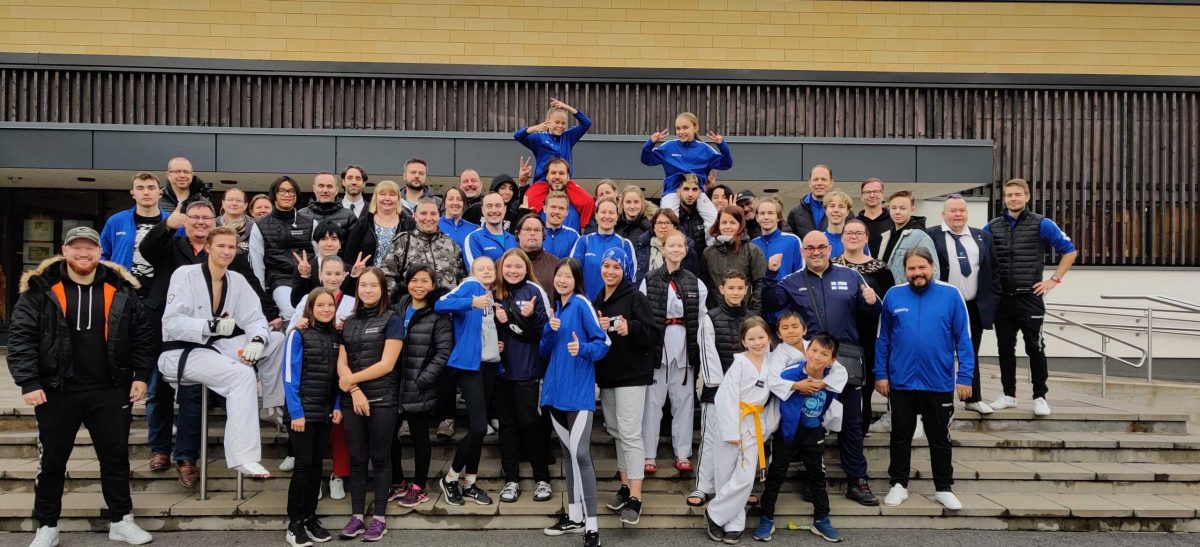
TU11 team in a group photo.
Finland's team.
Categories
front page Slider General

Sports journalists chose Christian Kamphuis as the best player of the year

Sports journalist Liito The best of the species athletes 2018 -choices have been made. The best athletes of the sports have been selected since 1946. This year, the best in taekwondo was Christian Kamphuis. Taekwondo athletes 2011 congratulates!

http://www.urheilutoimittajat.fi/uutiset/7309/lajien-parhaat-urheilijat-2018-on-valittu

Categories
front page Slider General

Merry Christmas and Happy New Year!

Taekwondo athletes wish you a Merry Christmas and a Happy New Year! For the past year, we would like to thank our partners, instructors and coaches, and especially our enthusiasts and athletes, who have made 2018 a good taekwondo year!

Categories
front page Slider Newsletter

TU11 strongly represented in the business series World Championships

Taekwondo athletes had a strong representation at the World Movement Championships in Taipei, Taiwan, held over the weekend.

Below is the ranking, participant and series:
5. Frans Salmi (Budokwai), Olli Siltanen (Budokwai), Christian Kamphuis (TU11), U30 Team Male
9. Christian Kamphuis, Free Style O17
9.-20. Linda Räkköläinen (HIPKO), Nea Säynäjoki (Kumgang), Elina Tikkanen (TU11), U30 Team Female
16.-24. Mia Knutsson (EHT), Methasit Kopisto (TU11), Cadet pair
12. Helmi Riuttala (Pori), Sara Quinones (TU11) and Mia Knutsson (EHT), Kadetti Team
Ville Lehtinen, O30 Male
Linda Räkköläinen, Nea Säynäjoki, Daniel Halonen, Christian Kamphuis (TU11), Olli Siltanen, Freestyle Team

Juho Ranta took care of the team's physiotherapy.

Categories
front page Slider Newsletter

TU11 strongly represented in the business series World Championships

Taekwondo athletes had a strong representation at the World Movement Championships in Taipei, Taiwan, held over the weekend.

Below is the ranking, participant and series:
5. Frans Salmi (Budokwai), Olli Siltanen (Budokwai), Christian Kamphuis (TU11), U30 Team Male
9. Christian Kamphuis, Free Style O17
9.-20. Linda Räkköläinen (HIPKO), Nea Säynäjoki (Kumgang), Elina Tikkanen (TU11), U30 Team Female
16.-24. Mia Knutsson (EHT), Methasit Kopisto (TU11), Cadet pair
12. Helmi Riuttala (Pori), Sara Quinones (TU11) and Mia Knutsson (EHT), Kadetti Team
Ville Lehtinen, O30 Male
Linda Räkköläinen, Nea Säynäjoki, Daniel Halonen, Christian Kamphuis (TU11), Olli Siltanen, Freestyle Team

Juho Ranta took care of the team's physiotherapy.

Categories
front page General

Revised WT match rules training on Wednesday 27 June 2018 17:00-19:00

The updated rules are already in use at the SC, so we decided to organize a training session in our gym on the topic. IR referee Abdelhak Lemzouri, who attended The 103rd International Kyorugi Referee Seminar in Croatia from 11 to 14 June, works as a trainee.

The training is free for campers and representatives of other clubs can participate by paying 10 euros in cash on the spot.

Abdelhak Lemzouri is not only an IR judge with long experience, but also a teacher and coach, so different perspectives will certainly be covered. The language of education is English.

Categories
front page General

Revised WT match rules training on Wednesday 27 June 2018 17:00-19:00

The updated rules are already in use at the SC, so we decided to organize a training session in our gym on the topic. IR referee Abdelhak Lemzouri, who attended The 103rd International Kyorugi Referee Seminar in Croatia from 11 to 14 June, works as a trainee.

The training is free for campers and representatives of other clubs can participate by paying 10 euros in cash on the spot.

Abdelhak Lemzouri is not only an IR judge with long experience, but also a teacher and coach, so different perspectives will certainly be covered. The language of education is English.

Categories
front page Slider

Jenna represents Finland and Taekwondo athletes at the European Championships

Jenna Partanen represents Finland and Taekwondo athletes at the European Championships in Kazan, Russia. Jenna's series, women under 67 kilos, will be held on Saturday 12.5.

The entire event schedule here >>

The charts can be found here, Jenna's draw on Friday evening >>

Series participants >>

The whole club is cheering for Jenna in the toughest tournament of the year!