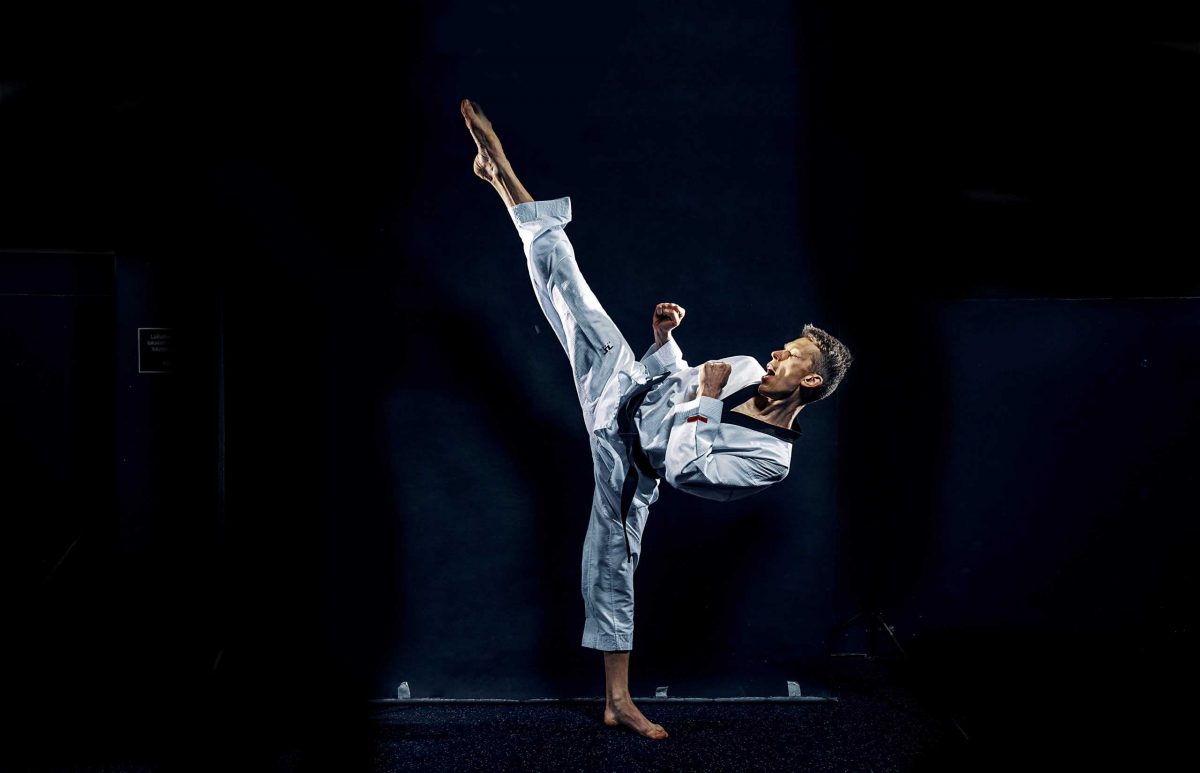
Another side kick with Petter!
https://youtu.be/DUnGToXmVaY
Categories
 Taekwondo athletes 2011 | Taekwondo | Helsinki | Espoo | Vantaa
Another side kick with Petter!
https://youtu.be/DUnGToXmVaY
Urheilun eetos tiivistyy nähdäkseni hyvin olympialaisten tunnuslauseessa ”Citius, Altius, Fortius”. Se on jatkuvaa parempaan suoritukseen pyrkimistä. Yleiset inhimilliset arvot, lait ja säännöt rajaavat kuitenkin parhaaseen suoritukseen pyrkimisen keinoja ja samalla määrittelevät kehikon toiminnalle.
From the cross pressure of always striving for betterness and the limitations created by the frames also springs the innovativeness typical of top sports. When performance is guided by rules, athletes strive to do everything within the rules to optimize their chances of success. The IAAF's rule junkies compete with shoe manufacturers, WT changes rules like a shirt, and there is a constant drawing of boundaries regarding permitted training methods, e.g. in the field of sports medicine.
Without holding long meetings, forming committees and writing sophisticated programs, it is quite easy to see what the ethos of sports can mean in club activities, although judging by the number of meetings, committees and programs this seems like a very difficult thing. According to my understanding, the sports club must strive for better performance at all levels with universal human values, laws and agreed rules as guidelines.
You could imagine that here is an easy and clear recipe for a sports club. But the concept can only be effective when all actors understand the nature of the activity and commit to a joint effort. And now we are already at the edge of more difficult things. Constantly striving for betterness requires a clear picture of yourself and your own potential. In addition, development requires constant critical self-evaluation and honest review of operations. The requirements apply to all levels, from the individual to parts of the organization and finally to the entire organization.
What separates sports from elite sports in terms of the quality of activities is the centrality of extending a high level of requirements to everything that is done. Even in the details, the aim is to maximize the conditions favorable to success, and even things that seem like side effects are gutted in order to find the benefit. The difference between good and bad elite sports is finding the most important things and focusing on them. So you have to think through even the little things, but you have to focus on the key factors. This is the most important thing in terms of the success of both top athletes and club activities. When striving for the better, we get lost in the hustle and bustle of side issues and the result is again meetings, committees and programs, and not a high-quality focus on core activities.
Values based purely on the pursuit of success without limitations would quickly lead to unethical solutions. It is important to understand that the Sports Club - just like a top athlete - does not live in a vacuum, separated from society. Although the solutions may be drastic from an outsider's point of view, they must still withstand strict ethical scrutiny.
The previously mentioned innovativeness is also needed. By repeating the same thing, you don't make leaps of development, but instead you start an eternal shelter run and lose the poles in no time.
Kun valitaan panostuksen painopisteitä, ratkotaan ongelmatilanteita tai vaikkapa kehitetään toimintatapoja, huomataan, ettei ”Citius, Altius, Fortius”, lait tai YK:n ihmisoikeuksien julistus anna suoria toimintaohjeita käytäntöön. Kuten kaikki arvopohjainen johtaminen, vaaditaan paljon ajatustyötä ja keskustelua oikeiden ratkaisujen löytämiseksi. Virheitäkin tulee, mutta pyrkimys kohti parempaa vaatii niiden korjaamista.
In elite sports, the result is constantly measured. It is a process that goes on forever, with only small respites. Even if there is success, new challenges are always waiting around the corner. From the point of view of the organization, the good thing here is that there is no place for laziness and too much complacency.
For those working in sports management and coaching positions, top sport not only gives purpose, but also challenges them to strive for their best. If the athletes are doing their best, why could or can less be demanded from other sports actors?
Ethically, in a sustainable way, to raise international level top athletes and people who live a sporty lifestyle, and to improve the recognition and status of taekwondo as a sport in Finland.
Front kick and mobility exercise with Petter!
https://youtu.be/jQmiCR8WJjw
Side kick with Petter!
https://youtu.be/FOfHFkvCz94
Side kick with Petter!

The Regional Administrative Agency of Southern Finland has ordered all private sports facilities to be closed between April 1 and April 14. The decision does not apply to those born in 2008 and after. The exercises for the others are on 1.4. canceled from We will publish the new practice schedule as soon as possible.
We will organize on Tuesday 6.4. Zoom meeting for all club enthusiasts and their guardians at 17:00-18:00. At the meeting, the club's corona measures, alternative forms of training and the situation in general will be reviewed. We hope that you will send us any mind-boggling questions or wishes about training formats in advance either via Whatsapp or e-mail. Guardians of enthusiasts under the age of 13 are also expected to participate in the meeting.
Link to the meeting: TU11's corona conference
Password: 2011
Please note that the instructions can change quickly, so follow our announcements closely.
A big thank you to all of you for the safe training so far!
Voit tukea toimintaamme helposti joko ryhtymällä tukijaksemme suoraan tai lahjoittamlla rahaa joko TU11-rahastoon tai Hannin Pukurahastoon.
Ryhtyessäsi tukemaan toimintaamme, tarjoamme erilaisia yhteistyömuotoja. Tasoja on 3, Nimitukija, Päätukija ja Tukija.
Jos kiinnostuit, ole yhteydessä Sampo Pajulampeen numerossa 045 182 7290 tai info@tu11.fi.
Jos kiinnostuit, ole yhteydessä Sampo Pajulampeen numerossa 045 182 7290 tai info@tu11.fi.
Through our fund we support our underprivileged enthusiasts
75 % of the recreational fee (Board decision 100%)
75 % of the domestic race entry fee for children and young people (Board decision 100%)
75 % lasten, kadettien ja junioreiden ulkomaan kisojen osallistumismaksuista (hallituksen päätöksellä 100 %)
Our support fund has a fundraising permit no.
The body providing support to the fund may determine which of the above items will be used and may impose specific conditions on the granting of support.
Kerää työntekijöiltäsi tukisumma ja tuplaa se yrityksesi toimesta. Tarjoamme alustan haasteen toteuttamiseksi. Haasteeseen kuuluu tutustuminen taekwondoon ja urheilijoihemme noin 20 hengen ryhmissä.
3000 euroa takaa keskimäärin 75 tuettua harrastuskuukautta tai noin 80 tuettua osallistumista kotimaan kisoihin taikka noin 25 tuettua osallistumista ulkomaan kisoihin
2000 euroa takaa keskimäärin 50 tuettua harrastuskuukautta tai noin 55 tuettua osallistumista kotimaan kisoihin taikka noin 15 tuettua osallistumista ulkomaan kisoihin
1000 euroa takaa keskimäärin 25 tuettua harrastuskuukautta tai noin 25 tuettua osallistumista kotimaan kisoihin taikka 8 tuettua osallistumista ulkomaan kisoihin.
Jos kiinnostuit, ole yhteydessä Sampo Pajulampeen numerossa 045 182 7290 tai info@tu11.fi.
Hanni's Costume Fund provides free costumes for underprivileged children and young people. Yhden puvun hinta on 30€ ja voitte hankkia haluamanne määrän pukuja. Yhteistyökumppanimme Prodobok Finland Oy tarjoaa toisen puvun jokaista lahjoitettua pukua kohti.
In cooperation with: Jos kiinnostuit, ole yhteydessä Sampo Pajulampeen numerossa 045 182 7290 tai info@tu11.fi
Voit tukea toimintaamme helposti joko ryhtymällä tukijaksemme suoraan tai lahjoittamlla rahaa joko TU11-rahastoon tai Hannin Pukurahastoon.
Ryhtyessäsi tukemaan toimintaamme, tarjoamme erilaisia yhteistyömuotoja. Tasoja on 3, Nimitukija, Päätukija ja Tukija.
Jos kiinnostuit, ole yhteydessä Sampo Pajulampeen numerossa 045 182 7290 tai info@tu11.fi.
Jos kiinnostuit, ole yhteydessä Sampo Pajulampeen numerossa 045 182 7290 tai info@tu11.fi.
Through our fund we support our underprivileged enthusiasts
75 % of the recreational fee (Board decision 100%)
75 % of the domestic race entry fee for children and young people (Board decision 100%)
75 % lasten, kadettien ja junioreiden ulkomaan kisojen osallistumismaksuista (hallituksen päätöksellä 100 %)
Lahjoita MobilePaylla halaumasi summa numeroon 49320. Lisää maksuun viite RAHASTO.
Hanni's Costume Fund provides free costumes for underprivileged children and young people. Yhden puvun hinta on 30€ ja voitte hankkia haluamanne määrän pukuja. Yhteistyökumppanimme Prodobok Finland Oy tarjoaa toisen puvun jokaista lahjoitettua pukua kohti.
Lahjoita MobilePaylla halaumasi summa numeroon 49320. Lisää maksuun viite HANNI.
Support is decided by the Executive Director and decisions are reviewed by the Board of Directors on the basis of the club's ethical principles. Read more about our Code of Conduct: https://tu11.fi/taekwondo/eettinen-ohje/
If there is something that requires special consideration, the Board will decide. The Board may decide to pay the full amount of the invoice or to grant aid to groups other than those mentioned in the conditions of the aid if there are no other applicants or if there are particularly serious grounds for doing so.
The subsidy will be deducted from the amount to be billed and the customer will receive a new invoice with information on how to pay it. For the Hanni Costume Fund, the enthusiast will receive a new costume by showing the decision at the Pro Dobok Finland service point.
We do not ask for detailed information.
All data will be destroyed after the application has been approved. Distributed aid is recorded in the database. Donors' details are kept in our accounts and records. Read more about data processing: http://www.tu11.fi.fi/taekwondo/gdpr/ and accounting information: Data protection at OP
If the support is paid by MobilePay, the donors' data will be stored in MobilePay's system in accordance with MobilePay's terms and conditions. Read more: MobilePay data processing agreement
Separate, fully anonymised accounts are kept of donated funds and their use, which are available to members of the association on request.
Good Friday 2.4. – NO EXERCISES
Saturday 3.4. – NO EXERCISES
Sunday 4.4. – NO EXERCISES
Monday 5.4. – NO EXERCISES
Tuesday 6.4. exercises according to the normal corona schedule, if possible. Follow the news from our website, from whatssapp or from social media regarding possible changes.
Happy Easter!
Mon 18:30-19:30
Wed 17:00-18:00
Thu 18.30-19.30 live training online
Fri 17.00-18.00
When the taekwondo hobby takes you along, competitive training is a great way to increase the amount of training and find new challenges. Even though the idea of participating may seem scary, it's worth jumping in boldly!
Normally, competition training starts with amateur competition groups. During the exception period, training starts directly by participating in the competition group. You can train in a group once a week without a competition contract. The exercises take into account the level and skills of the new group members.
Read more about the first steps of a competitor's path in Taekwondo athletes>>
In 2013, we defined the strategy and goals until 2021. As the season came to a close, the board reviewed the implementation of the strategy and vision. In general, the board stated that even though not all goals were achieved, one must be satisfied with the first ten-year period.
The new strategy was formulated on the basis of the old one. The vision was renewed and the formulations of the mission and values were refined to better match the goals of the operation.
In 2031, TU11 is the largest Finnish taekwondo organization with several offices and cooperative clubs.
In 2031, TU11 will be the best environment in Finland to practice taekwondo. TU11 implements its values and the operation is socially, economically and environmentally sustainable.
In 2031, TU11 will be the best national taekwondo club in all official forms of taekwondo competition, and internationally its adult athletes are at the level of prestigious competition medals.
TU11 is at the forefront of technical and athletic development.
Mission
The mission of taekwondo athletes is:
Ethically, in a sustainable way, to raise international level top athletes and people who live a sporty lifestyle, and to improve the recognition and status of taekwondo as a sport in Finland.

The four basic values and cornerstones of the activities of taekwondo athletes are ENTHUSIASM FOR, KNOWLEDGE, PLANNING and MEDIATION. For taekwondo athletes, values are an essential part of activities and also guide everyday decision-making and practices. When the mission and vision tell why things are done and where we would like to reach, the values tell how we act and implement the mission and our journey towards the vision.
Read more about the activities of Taekwondo athletes»
Read what the hobby of taekwondo is like in Taekwondo athletes»